
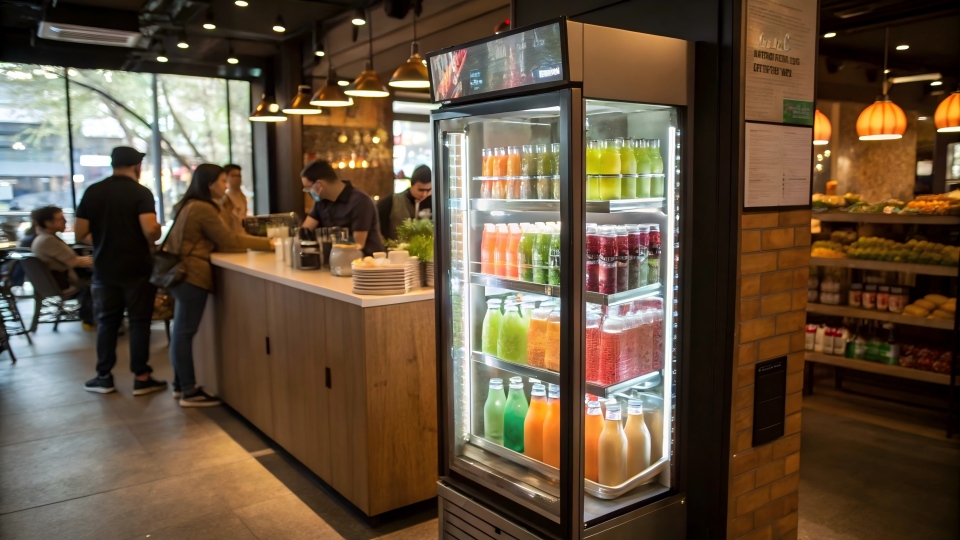
Your fridge doors fog up, hiding your products. This kills impulse buys and wastes your marketing budget. Heated glass doors keep your merchandise visible and sales flowing.
Electrically heated glass doors use low-power heating elements to stop condensation. This keeps your products and branding visible, boosting impulse buys and protecting your investment in retail space. Clear doors mean more sales, especially for promotional campaigns.
You worked hard to earn that retail space. You invested in beautiful product packaging and branding. It is frustrating to see it all disappear behind a layer of fog. Your customer walks by, cannot see what is inside, and keeps walking. That is a lost sale. We understand this problem because we have seen it happen many times. Let’s make sure every glance at your product counts. We will show you when you need these doors and how they turn visibility directly into profit.
What are electrically heated glass doors?
High humidity makes your glass doors foggy. Customers cannot see what is inside. Electrically heated glass doors solve this, keeping your display crystal clear every single day.
Electrically heated glass doors have small, invisible heating elements. They warm the glass surface just enough to stay above the dew point, which stops fog from forming. This ensures clear visibility in any environment.
To really understand heated glass, you first need to understand why condensation happens. It is all about a simple idea called the dew point.
The Basics of Dew Point
Warm air can hold more moisture than cold air. When warm, humid air from your store touches the cold glass surface of your refrigerator, the air cools down rapidly. It can no longer hold all that moisture. The excess water vapor turns into liquid droplets on the glass. We call this condensation, or fog. The exact temperature where this happens is the dew point. If your glass surface temperature is below the dew point of the room's air, you will get fog every time. It's a law of physics.
How Heaters Change the Game
An electrically heated door does not make the glass hot to the touch. The goal is much more precise. It uses a very small amount of energy to raise the glass surface temperature by just a few degrees. This is enough to keep the glass temperature above the room's dew point. As a result, the water vapor in the air never gets a chance to condense on the surface. The glass stays perfectly clear, no matter how humid it gets inside your store.
| Feature | Standard Glass Door | Electrically Heated Glass Door |
|---|---|---|
| Glass Surface | Cools to near internal fridge temperature. | Warmed slightly above the dew point. |
| Visibility in Humidity | Prone to fogging and condensation. | Remains crystal clear. |
| Customer Experience | Frustrating; customers cannot see products. | Seamless; products are always visible. |
| Staff Intervention | Requires constant wiping and cleaning. | Requires zero manual intervention for fog. |
How do electrically heated glass doors actually work?
You know condensation is the enemy. But how does a heated door fight it without wasting energy? The technology is simple but very effective for your business operations.
A very thin, transparent heating element is placed inside or around the glass panels. It gently warms the glass surface using a low-voltage current. This small amount of heat stops moisture from fogging up the view.
The magic is in the details, but the concept is straightforward. Our job as manufacturers is to make this technology both effective and efficient, so you get all the benefits without worrying about a high electricity bill. My experience in building refrigerators taught me that the best solutions are the ones that work silently in the background.
The Invisible Heating Element
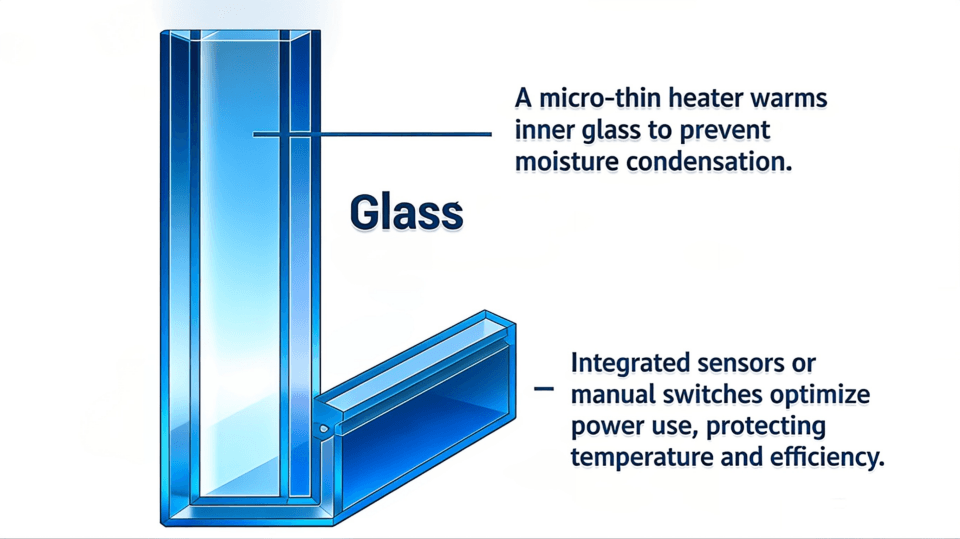
The "heater" is not a big, bulky part. In most modern systems, it is a micro-thin, transparent conductive coating applied directly to one of the glass surfaces inside the double or triple-pane unit. In other designs, it can be a series of very fine wires that are almost invisible, embedded around the perimeter of the glass. Both methods work by passing a safe, low-voltage electrical current through the material, which generates a small, even amount of warmth across the glass. You will not see it, but you will definitely see its results.
Smart Controls for Efficiency
Old-school heaters ran constantly, which wasted energy. Today’s systems are much smarter. We integrate controls that optimize power use. Some units use sensors that measure the ambient humidity in your store. The heater only activates when the humidity rises to a level that could cause condensation. Other models use timers or can be controlled with a simple manual switch. The goal is always the same: use the minimum amount of energy necessary to keep the glass clear. This protects the internal product temperature, keeps your energy costs low, and supports your sustainability goals.
Why are heated glass doors so important for your business?
A foggy door is more than an annoyance. It is a direct barrier to sales. Every moment your product is hidden from view, you are losing a potential customer.
Clear doors sell more products. Period. It is about boosting impulse buys and maintaining brand visibility. Heated doors guarantee your products are always seen, protecting your sales and product integrity without constant staff intervention.
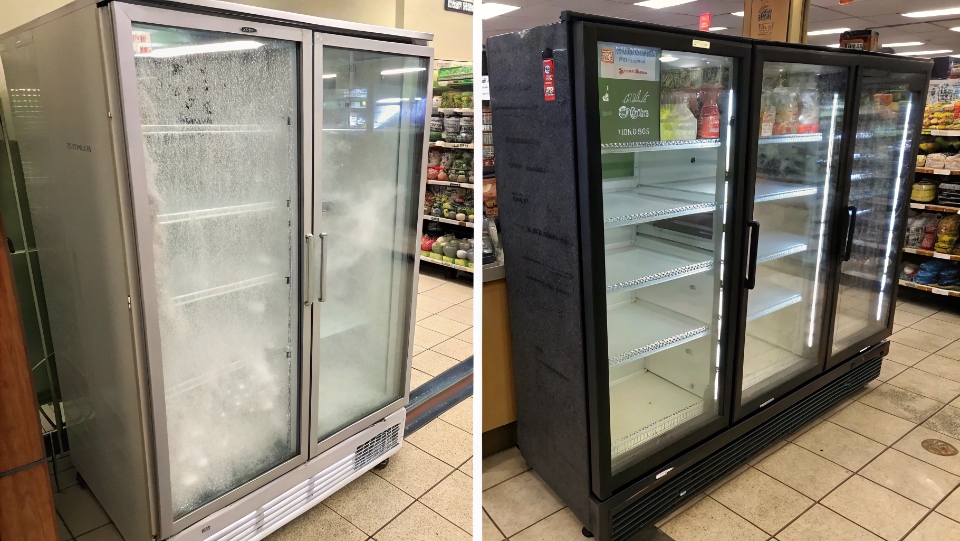
When I started my own factory, I focused on details that directly helped my clients grow their businesses. A clear door is not just a feature; it is a sales tool. For a business owner like you, this translates into real money.
Visibility Drives Impulse Buys
Shoppers buy with their eyes, especially for cold drinks and snacks. Your retro refrigerators have a unique, eye-catching design. That visual appeal is a key part of your brand. When a customer sees that cool design and the perfectly chilled products inside, it creates an immediate desire. If that view is blocked by condensation, the opportunity is lost. The customer does not stop. They do not even know what they are missing. In high-traffic shops, where decisions are made in seconds, a clear view means a faster purchase and higher sales volume.
Protect Your Brand and Product
A clear door also signals quality and professionalism. It shows customers that you care about your products and their experience. Foggy, wet doors can make a display look messy and unappealing. Furthermore, constant condensation can hint at temperature instability. By preventing fog, the internal temperature of the refrigerator remains more stable because staff are not constantly opening the door to wipe condensation off. This protects the integrity and shelf life of your products.
How can you tell if you need a heated door?
You do not want to overspend on features you do not need. But you also cannot risk losing sales to fog. Making the right choice is simple if you use data.
Consider your business environment. Is it humid? Is the fridge near an open door or outdoors? If the dew point in your location is close to the glass temperature, you need a heated door. Use data, not guesswork.
I always advise my clients to decide with data, not hope. Before you place a large order, let's make sure the equipment is perfectly matched to its future home. A little bit of research now can save you a lot of headaches and lost revenue later.
Analyze Your Location
Where will these refrigerators be used? The location is the most important factor.
- Climate-Controlled Indoors: A unit inside a modern, air-conditioned supermarket in a dry climate might not need a heated door.
- High-Traffic Areas: If the refrigerator is near a main entrance, the constant flow of outside air can cause big swings in temperature and humidity. A heated door is a wise investment here.
- Humid Climates & Coastal Areas: For a business especially near the coast, humidity is a major factor for much of the year. In these regions, a heated door is not a luxury; it is essential for business.
- Semi-Outdoor Spaces: Patios, kiosks, or open-front cafes have almost no protection from ambient weather. A heated door is mandatory in these situations.
Check the Supplier’s Environmental Rating
Every commercial refrigerator we build comes with a climate class rating. This tells you the maximum ambient temperature and relative humidity (RH) it was designed for. For example, a common rating is 32°C at 60% RH. You need to compare this rating to the actual conditions in your stores. If your environment frequently exceeds the unit's rating, condensation is almost guaranteed. You should choose a model with heated doors from the start.
How do we provide the right heated door solution?
Finding the perfect refrigeration solution can feel complicated. You need reliability without the hassle. We make it simple by building the right solution directly into our units.
We build all our freezers with heated doors as a standard feature. Our coolers can handle most indoor climates easily. For tougher locations, we offer simple upgrades like better glass packages and smarter, more powerful heaters.
Our goal is to be your partner, not just a supplier. That means providing you with a product that works perfectly in your specific market. You tell us about your business environment and plans. We will build the right tool for the job.
Freezers: Heated Doors by Default
The temperature difference between the inside of a freezer (around -18°C) and the room is huge. This makes freezers extremely prone to condensation and even ice buildup on the doors. For this reason, all our freezers ship with integrated heated doors as a standard, non-negotiable feature. This gives you peace of mind, knowing your frozen products will always be clearly visible to customers. No surprises, no last-minute problems.
Coolers: A Strong Baseline
Our standard commercial coolers are robust. We engineer them to perform flawlessly in most common indoor retail settings, rated for at least 32°C ambient temperature and 60% relative humidity. This baseline covers a wide range of applications, from convenience stores to supermarkets.
Upgrades for Harsh Environments
For challenging environments like those in coastal cities, open storefronts, or stadiums, we provide tailored upgrades. We can use triple-pane glass with special Low-E coatings to improve insulation. We will install higher-wattage heating elements to combat extreme humidity. We can also add smart, humidity-sensing controls that maximize performance while minimizing energy consumption. Your brand stays irresistible, and your operations stay lean.
Conclusion
Clarity wins sales. Electrically heated glass doors keep your products visible and your brand sharp. Tell us your climate needs, and we will build the right refrigerator for your business.