
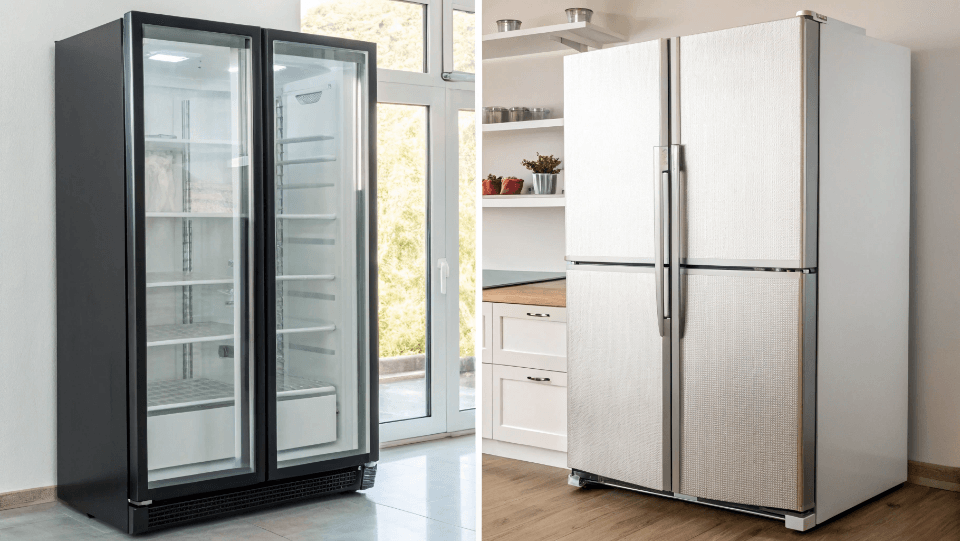
Picking the right commercial fridge feels overwhelming. A bad choice can hurt your profits through high energy bills or lost sales. This guide will help you choose correctly.
Choose a glass door fridge for front-of-house to display products and boost impulse buys. Choose a solid door fridge for back-of-house storage where energy efficiency, durability, and stable temperatures are most important. Glass doors sell, solid doors save.
The decision between a glass door and a solid door fridge seems purely about looks, but it goes much deeper. This choice impacts your daily operations, your electricity bill, and even your sales. Let's break down the details so you can invest in the perfect unit for your business, ensuring you don’t waste a single dollar.
Is a Glass Door Fridge Right for Your Business?
You need to show your products, but you worry about high energy costs. Your customers can't buy what they can't see. A glass door fridge solves this by becoming a silent salesperson.
A glass door fridge is perfect for increasing impulse sales with attractive displays and allowing for quick inventory checks. It excels in customer-facing areas like cafes, retail stores, convenience stores, and even high-end Airbnb rentals where looks matter.
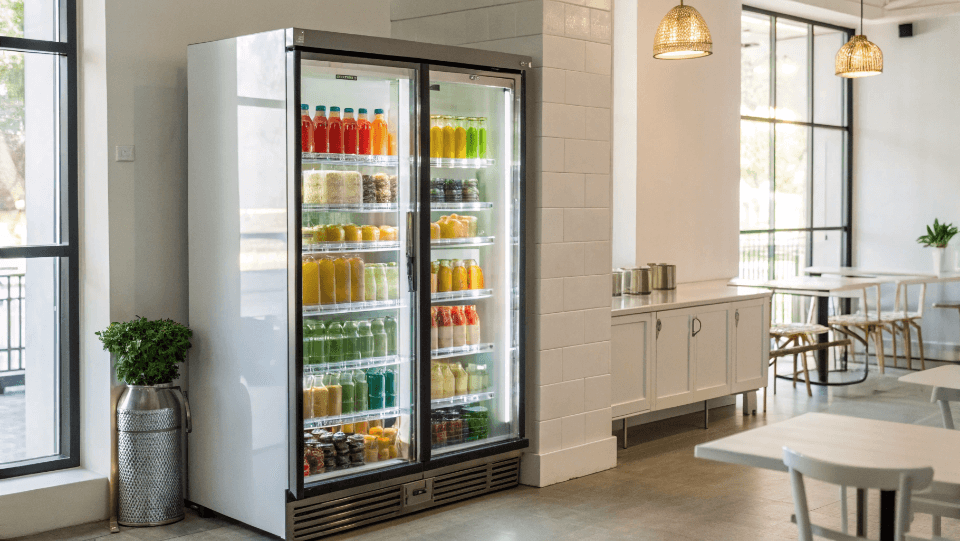
A glass door refrigerator does one thing exceptionally well: it turns your inventory into a display. When customers can see cold drinks, desserts, or snacks, they are much more likely to make an impulse purchase. I’ve seen this happen firsthand. A client with a small cafe saw his drink sales jump by over 20% in one month just by switching from a solid door cooler to a glass door unit under the counter. It also makes life easier for your staff. They can see what needs restocking at a glance without opening the door and letting cold air escape. The main drawbacks are efficiency and maintenance. Glass is not as good an insulator as a solid door, so the compressor runs more, using more energy. You also have to keep the glass clean. Fingerprints and smudges look unprofessional and can turn customers away.
| Pros of Glass Door Fridge | Cons of Glass Door Fridge |
|---|---|
| Boosts impulse sales | Lower energy efficiency |
| Easy inventory checks | Higher upfront cost |
| Attractive, modern look | Needs frequent cleaning |
| Enhances customer experience | Less durable than solid doors |
When Should You Choose a Solid Door Fridge?
Your kitchen is a busy place, and high energy bills are a constant worry. A fridge with poor insulation has to work harder, costing you more money. A solid door fridge is the dependable workhorse you need.
You should choose a solid door fridge for its superior energy efficiency, durability, and temperature stability. It is the best choice for back-of-house storage, busy commercial kitchens, and any area where you don't need to display products.
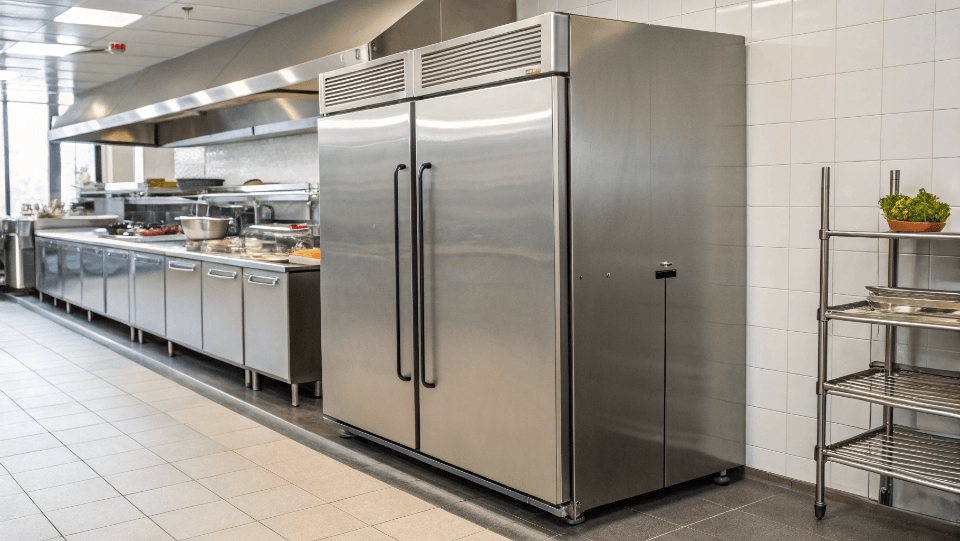
Think of a solid door fridge as the behind-the-scenes hero of your kitchen. Its main job is to keep a large volume of ingredients safe and at a consistent temperature, and it does this job very well. The solid, insulated doors are excellent at trapping cold air, which means the refrigeration system doesn't have to work as hard. This directly translates to lower electricity bills. When I worked in a kitchen equipment factory, the durability tests we ran were intense. Solid stainless steel doors could take hits from carts and heavy use day after day without failing. They are built for tough environments. The main disadvantage is obvious: you can't see what's inside. This means staff must open the door to find ingredients, which can let warm air in and waste time if the fridge is disorganized. But for pure storage and efficiency, it can't be beaten.
| Pros of Solid Door Fridge | Cons of Solid Door Fridge |
|---|---|
| Highly energy efficient | No product visibility |
| Excellent durability | Can be difficult to organize |
| Better temperature stability | Less attractive look |
| Lower maintenance | Requires opening to see stock |
How Do You Decide Between Glass and Solid Doors?
You know the pros and cons of each type, but you still feel stuck on the final decision. Making the wrong choice is an expensive mistake you can't afford. Just focus on these key factors to find your answer.
To decide, you must prioritize your main goal: visibility or efficiency. If you need customers to see your products to drive sales, choose glass. If you are storing ingredients in the back, where savings and durability are key, choose solid.
Let’s make this even simpler. Your decision really comes down to answering one question: where will the fridge be and who will use it? My friend Min, who founded his own fozen food stores in Korea, faces this question all the time. For his showroom, where he displays all kind of fozen foods, he uses glass door models to show off the interiors. But for his warehouse where he stores his stock, he uses efficient solid door units. The location and purpose dictate the choice. If the fridge is in a customer area, you need visibility. If it's in a busy kitchen, you need durability and efficiency. Don't overthink it. Match the tool to the job.
| Factor | Glass Door Fridge | Solid Door Fridge | The Right Question to Ask |
|---|---|---|---|
| Location | Front-of-house (customer facing) | Back-of-house (kitchen, storage) | Will my customers see this fridge? |
| Primary Goal | Increase sales, display products | Lower costs, store ingredients | Am I trying to sell or trying to save? |
| Energy Use | Higher | Lower | How important are low electricity bills to my bottom line? |
| Durability | Lower | Higher | Is the fridge in a high-traffic area with a risk of damage? |
Conclusion
Your choice is clear once you know your goal. Glass doors are for selling and displaying products. Solid doors are for storing ingredients and saving on energy costs.