
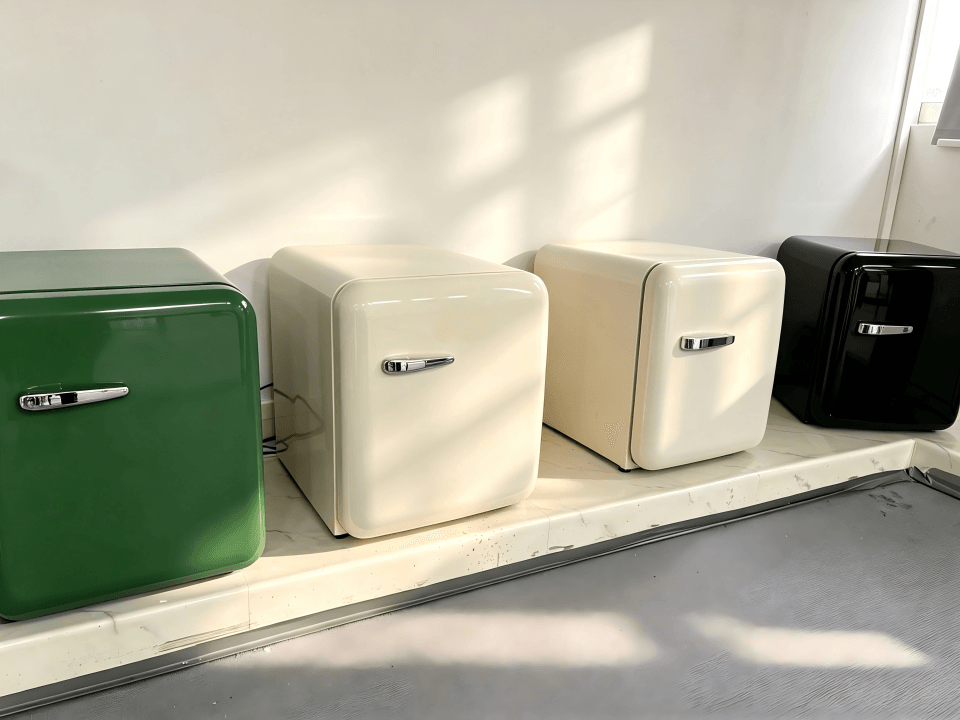
Struggling to decide between a standard fridge and a custom model for your brand? The wrong choice can drain your budget and hurt your brand. Let's find the best path.
Off-the-shelf fridges are faster to market and have lower initial costs, making them great for new businesses. Custom fridges offer unique branding and features to stand out, but require more time and a larger investment. The best choice depends on your brand goals, budget, and timeline.
This decision is a major one for any appliance business owner. I've worked with many entrepreneurs, who is building a fantastic retro appliance brand. He aims to be number one in his category, and this choice is central to his strategy. The details really do matter. Based on my years starting in a factory and then building my own, I want to share what I've learned. Let's dig deeper into the specifics so you can make a confident choice for your business's future.
Which option gives you a stronger brand identity?
Want your refrigerators to truly stand out in a crowded market? A generic look won't make you the number one brand. Customers, especially those buying retro products, want personality.
Custom fridges are far superior for building a unique brand identity. They allow for exclusive colors, unique handle designs, and custom logos that make your product unforgettable. Off-the-shelf models limit you to basic logo placement, making it hard to differentiate from competitors using the same base unit.
When your goal is to be the leader in a niche like retro refrigerators, your brand is everything. Your product can't just look like everyone else's. In my old factory days, I saw this firsthand. We had a client who wanted a specific shade of pale yellow for their retro line. It was not a standard color. We had to work with our paint supplier to create it just for them. Their competitors couldn't copy it. This small detail made their brand instantly recognizable. For someone who relies on online influencers, a unique and "Instagrammable" product is pure marketing gold. A custom design generates buzz that a standard model never could.
Let's break down how this works.
| Branding Element | Off-the-Shelf Fridge | Custom Fridge (OEM/ODM) |
|---|---|---|
| Color Options | 5-10 standard factory colors | Any Pantone color imaginable |
| Logo Placement | Simple sticker or silk-screen | Embossed logo, custom metal plate |
| Hardware | Standard factory handles & knobs | Unique shapes, materials (wood, chrome) |
| Brand Exclusivity | Low, competitors can use same model | High, the design is yours alone |
What are the real costs and MOQs for each choice?
Are you worried about high Minimum Order Quantities (MOQs) and hidden fees? A financial miscalculation here can tie up all your cash or leave you buried in unsold inventory.
Off-the-shelf fridges have lower MOQs, often just one container (around 100 units), and a clear per-unit cost. Custom fridges require much higher MOQs, often 300+ units, and involve upfront mold fees ranging from a few thousand to over $30,000.
The financial side is where the decision gets serious. The biggest hidden cost in custom manufacturing is the mold fee. If you want a unique door shape or a special handle, the factory has to create new steel molds to produce it. These molds are expensive and belong to you, but it's a huge upfront cost before you even produce a single unit. I remember the stress of commissioning a new set of door molds for a client. It cost over $20,000, and we all held our breath until the first samples came out perfectly. Off-the-shelf models use existing molds, so you skip that cost entirely. This makes them much more accessible if your capital is limited. For Alex, with his 2,000-square-meter warehouse, he needs to ask if he can afford both the mold fee and the cost of storing a larger MOQ.
Here is a simple financial comparison:
| Cost Factor | Off-the-Shelf Fridge | Custom Fridge (OEM/ODM) |
|---|---|---|
| Unit Price | Lower | Can be slightly higher per unit |
| Mold Fee | $0 | $5,000 - $30,000+ |
| MOQ | Low (e.g., ~100 units / 40HQ) | High (e.g., 300-500+ units) |
| Initial Investment | Low | Very High |
| Cash Flow Impact | Manageable | Significant drain on cash |
How quickly can you get your fridges to market?
Do you need to launch your new fridge line before the busy holiday season? Production and shipping delays can cause you to miss your biggest sales windows of the year.
Off-the-shelf fridges offer a very fast time-to-market, often ready to ship in 30-45 days. A fully custom fridge is a much longer process, typically taking 4-6 months from final design approval to the start of mass production due to prototyping and testing.
Speed can be a huge competitive advantage. If you choose an off-the-shelf model, the factory has all the parts and processes ready. You place an order, they add your logo, and production begins almost immediately. For custom projects, the timeline is much, much longer. I've seen clients get very frustrated during this phase.
The Customization Timeline
The process involves many steps, and each one takes time. First, you have the design phase, where engineers turn your idea into technical drawings. Then comes mold creation and prototyping, which can take months. We would create a prototype, ship it for approval, and the client would almost always have small changes. Each change adds weeks to the timeline. After the prototype is perfect, it needs safety and performance testing. Only then can mass production begin.
The Off-the-Shelf Advantage
With a standard model, you skip all of that. The product is already designed, tested, and certified. The factory just needs to schedule your order into their production plan. For a business owner aiming to dominate sales in 2026-2027, speed is critical. He could launch an off-the-shelf model with custom colors this year to build cash flow, then invest that profit into a fully custom model for next year.
Which option presents a bigger risk to quality?
Are you afraid of receiving an entire container of faulty products? Quality problems can destroy your online reputation and lead to thousands of dollars in returns and angry customers.
Off-the-shelf models generally have lower quality risks because they are proven designs built with tested components. Custom fridges introduce new variables; new designs or parts can have unforeseen issues, requiring strict testing to ensure they are reliable and durable.
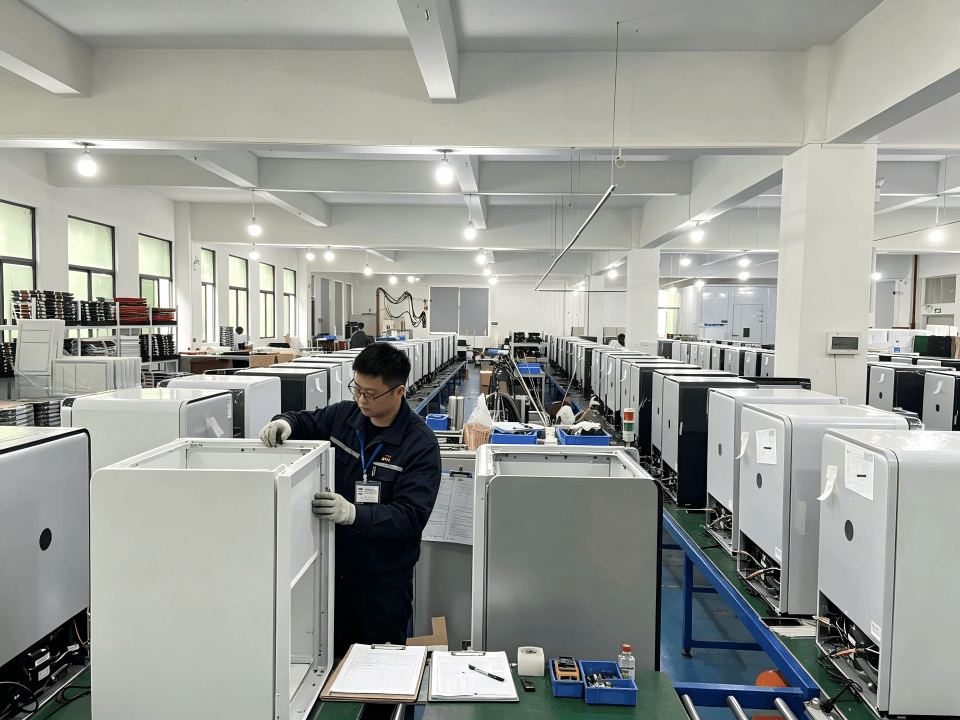
This is an insight that comes directly from my experience on the factory floor. We knew our standard models inside and out. We knew which compressor brand was the most reliable, which thermostat settings worked best in different climates, and which hinges would last for 100,000 door openings. The whole system was proven. When a client requested a custom feature, it introduced an "unknown." For example, a new, stylish handle looks great, but is it strong enough? We had to perform stress tests to make sure it wouldn't break after a year of use. A custom refrigerator is a new product, and every new product carries a risk of undiscovered flaws. An experienced factory partner is essential here to help you test for and eliminate these risks before you ship a single unit.
Consider the risk factors:
| Risk Factor | Off-the-Shelf Fridge | Custom Fridge (OEM/ODM) |
|---|---|---|
| Design Reliability | High (Proven over years) | Lower (Brand new, untested) |
| Component Failure | Low (Known parts) | Higher (New, unproven parts) |
| Required Testing | Standard final QC check | Extensive prototype testing needed |
| Potential for Returns | Low | Potentially higher at launch |
Conclusion
Ultimately, off-the-shelf fridges offer speed and low financial risk. Custom fridges build a powerful, unique brand. Your right choice depends on your long-term goals and your current resources.