
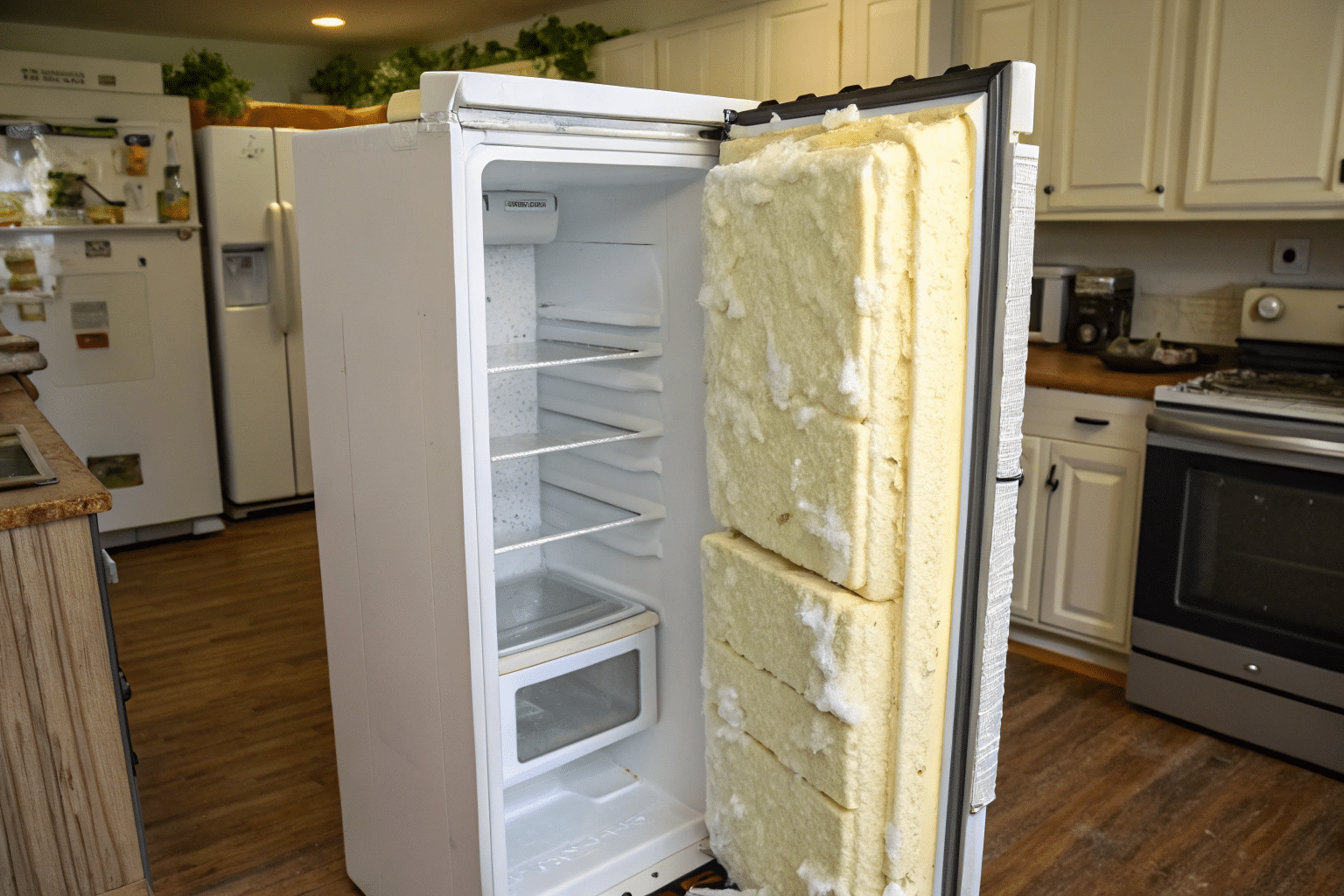
Are your electricity bills surprisingly high? Your refrigerator might be working overtime due to a hidden problem: insulation that is too thin, causing it to struggle to stay cool.
Thin refrigerator insulation foam drastically reduces energy efficiency. The compressor has to run longer and more frequently to maintain a cool temperature, leading to significantly higher electricity consumption and a shorter lifespan for the appliance.
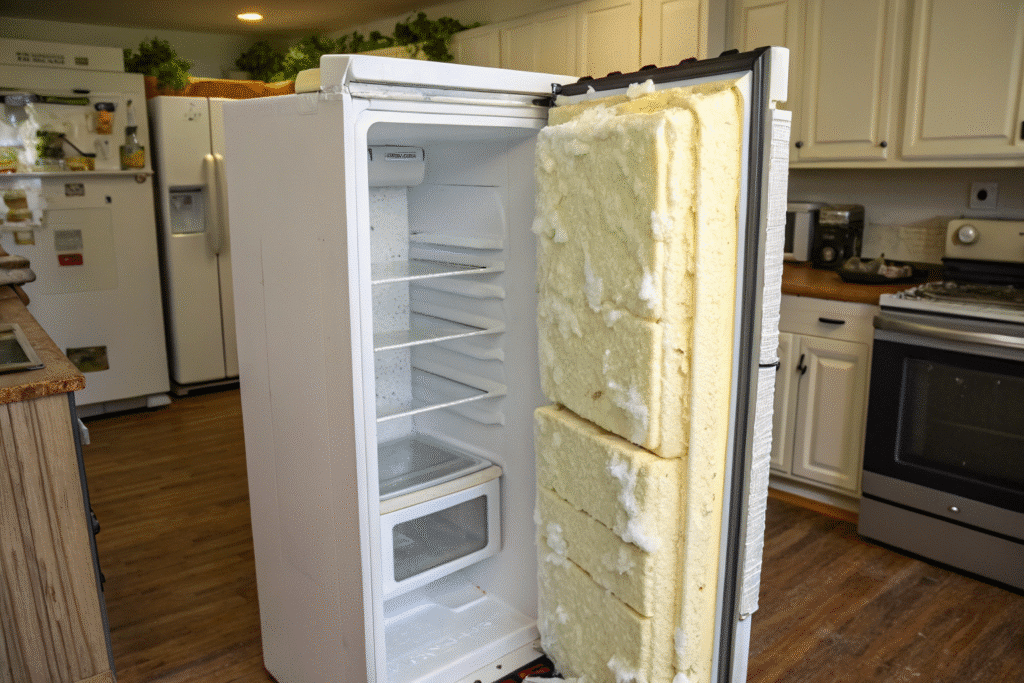 Refrigerator Insulation Foam Thickness
I’ve been in the kitchen equipment industry for years, from working on a factory floor to running my own trading company. I've seen firsthand how a small detail like foam thickness can make a huge difference in performance and cost. It's a critical factor that many buyers overlook, but it secretly determines whether you get a great deal or a long-term headache. Let's dive into why this matters so much for you and your business.
Why is it important that a refrigerator has good insulation?
Worried that your refrigerator is constantly running? The cause is often poor insulation, which silently drains power and wears out the appliance faster than it should.
Good insulation is crucial because it keeps the cold air inside and the warm air outside. This simple barrier means the compressor doesn't have to work as hard, saving you money on energy bills and extending your refrigerator's life.
 Energy Efficient Refrigerator
When I first started sourcing refrigerators for clients, I learned a vital lesson about climate. A refrigerator that works perfectly in Northern Europe might struggle in the Middle East. Why? The insulation. In hot and humid regions, you need more robust insulation to fight the constant heat. For my clients in places like Lebanon, I always recommend increasing the foam thickness by 10-15%. A standard 5cm foam wall might be fine for cooler climates, but a 7cm wall is much better for the heat in the Middle East.
However, the market is competitive. To offer lower prices, some manufacturers in places like Zhejiang and Shandong cut corners. I’ve seen brand-new, cheap refrigerators with foam as thin as 4cm. This saves them money on materials, but it costs you more in the long run. Here’s a simple breakdown:
| Foam Thickness | Energy Efficiency | Ideal Climate | Long-term Cost |
|---|---|---|---|
| Thin (4-5cm) | Low | Cool, Low Humidity | High |
| Standard (5-6cm) | Medium | Temperate | Moderate |
| Thick (7cm+) | High | Hot, High Humidity | Low |
So, when you're looking for a refrigerator, especially if you're importing OEM units like my client Alex, don't just look at the price tag. Ask about the insulation foam. Insisting on thicker foam is a smart investment that pays for itself.
Should I remove the foam around the fridge compressor tube?
Have you noticed some foam wrapped around pipes at the back of your fridge? You might think it's leftover packaging that needs to be removed for the unit to work properly.
Absolutely not. Do not remove the foam around the compressor tube. This is a functional part called suction line insulation, and it prevents condensation and improves the cooling system's efficiency.
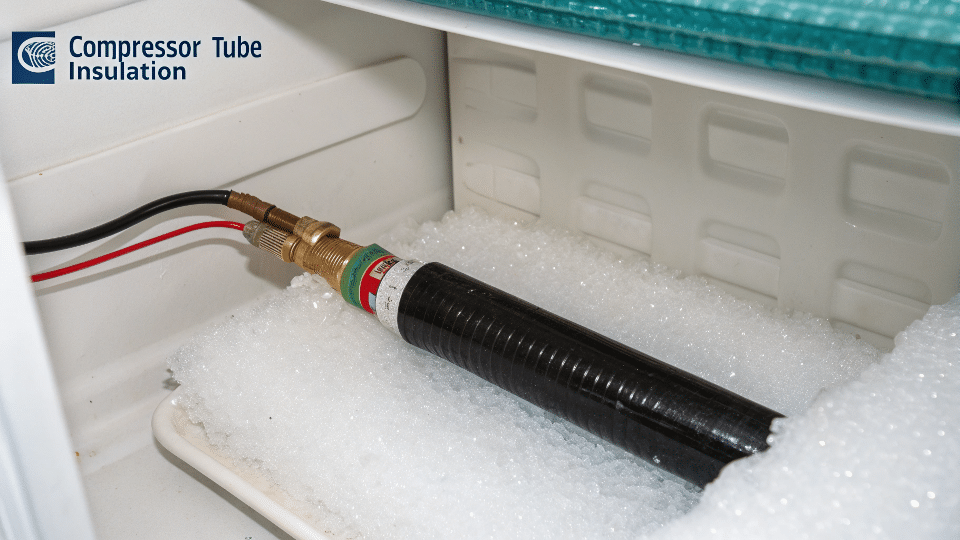 Refrigerator Compressor Tube Insulation
I remember getting a frantic call from a client once. He had just set up a new commercial display fridge in his cafe and found a puddle of water underneath it the next day. He was convinced the unit was leaking. When I arrived, the first thing I asked was, "Did you remove anything from the back of the unit?" He admitted he'd pulled off some "black packing foam" from a pipe near the compressor because he thought it looked messy.
That foam he removed was the problem. The pipe it covers is the suction line, which gets very cold as refrigerant flows back to the compressor. Without insulation, the cold pipe meets the warm, humid air of the room, causing water vapor to condense on it—just like a cold glass of water on a summer day. This condensation drips down, creating puddles and potentially causing water damage or rust. By removing it, he had accidentally created a leak where there was none. We replaced the insulation, and the problem was solved immediately. That foam is intentionally placed there by engineers to keep your refrigerator running efficiently and prevent a mess.
How to improve fridge insulation?
Is your current refrigerator not performing as well as it used to? You might be thinking you need an expensive replacement, but there are ways to give it an efficiency boost.
You can improve existing fridge insulation by checking and replacing worn-out door seals, adding external insulation panels, and ensuring it has proper clearance for airflow. These steps can help reduce energy consumption.
 Testing a Refrigerator Door Seal
While the best solution is to buy a refrigerator with thick factory insulation, you aren't helpless with the one you already have. Here are a few practical things you can do to give its performance a lift.
1. Check the Door Gasket
The rubber seal around your refrigerator door is a critical piece of insulation. Over time, it can crack, harden, or become loose. You can do a simple test. Close the door on a dollar bill. If you can pull the bill out easily, your seal is leaking cold air. Replacing a worn-out gasket is a cheap and easy repair that can make a big difference.
2. Give It Space
Refrigerators need to breathe. They release heat from coils on the back or bottom. If the unit is pushed up against a wall or crammed between cabinets, the heat gets trapped. This makes the compressor work harder to cool down. Make sure there are at least a few inches of clearance around the top, back, and sides. Also, avoid placing it next to a heat source like an oven or in direct sunlight.
3. Consider External Insulation
For an older unit or one in a very hot environment like a garage, you can add external insulation. You can attach rigid foam boards to the top and sides (but never the back, as this will block the coils). This isn't the most beautiful solution, but in a commercial setting or for a secondary fridge, it can be very effective at reducing energy use.
Can overstocking a fridge cause problems?
Do you cram your refrigerator full after a big grocery run? It seems logical to use every inch of space, but this can actually prevent your fridge from doing its job correctly.
Yes, overstocking a fridge is a problem. It blocks the flow of cold air, creating warm spots where food can spoil faster. It also makes the compressor run continuously to try and cool everything down, wasting energy.
 Overstocked Refrigerator Problems
Proper cooling depends entirely on air circulation. Your refrigerator has vents that push cold air out, which then needs to circulate freely around the food to keep everything at a consistent, safe temperature. When you pack every shelf tightly, you create blockades. Air can't get through, so some areas stay warm.
I often advise clients on how to arrange their commercial display units. The same principles apply to your home fridge. An empty fridge is inefficient because there's nothing to hold the cold. Every time you open the door, all the cold air rushes out. A well-stocked fridge is actually best. The cold food and drinks act like ice packs, helping to maintain the temperature. But there's a fine line between "well-stocked" and "overstocked."
Here is a quick guide:
| Stock Level | Airflow | Efficiency | Food Safety Risk |
|---|---|---|---|
| Understocked | Excellent | Low (cold air is lost easily when the door opens) | Low |
| Well-stocked | Good | High (cold items help maintain the temperature) | Low |
| Overstocked | Poor/Blocked | Low (compressor works overtime, energy is wasted) | High |
The key is balance. Leave some space between items and make sure you aren't blocking the vents at the back of the fridge. This ensures everything stays cool and safe to eat, without making your fridge work harder than it needs to.
Conclusion
Ultimately, the thickness of your refrigerator's insulation is not a minor detail. It directly impacts your energy bills and the appliance's lifespan, proving that the cheapest option is rarely the best.