
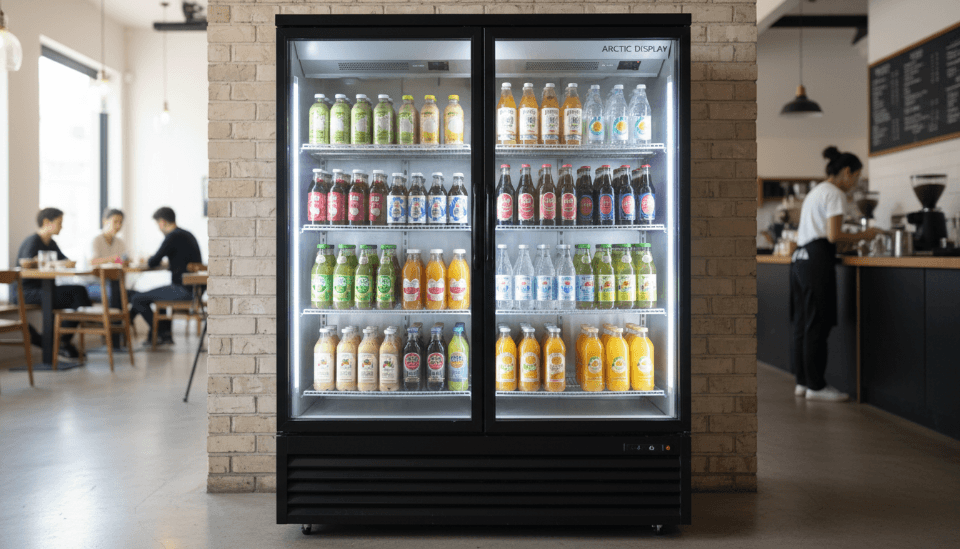
Struggling to make your drinks stand out? Customers walk past, and potential sales are lost because your products are hidden. A glass door fridge solves this by showcasing your offerings.
A glass door beverage fridge is a specialized commercial cooler with a transparent door. It is designed to both chill drinks and display them attractively to customers. This visibility encourages impulse purchases, making it a powerful merchandising tool for stores, cafes, and bars.
I've been in the refrigeration business for a long time, from working on a factory floor to running my own. I've seen firsthand how the right equipment can make or break a business. A glass door cooler isn't just a box that keeps things cold; it's a silent salesman that works for you 24/7. Understanding exactly what it is and how it works is the first step to using it effectively. Let's explore the details that matter for business owners like you.
What is a glass door fridge?
Are you confused by all the different types of commercial refrigerators? Choosing the wrong one is a costly mistake that can affect your inventory and your bottom line.
A glass door fridge is any refrigeration unit that uses a transparent door, usually made of glass, instead of a solid one. Its primary purpose is product display, allowing customers to easily see the contents without opening the door. They are used in many commercial settings.
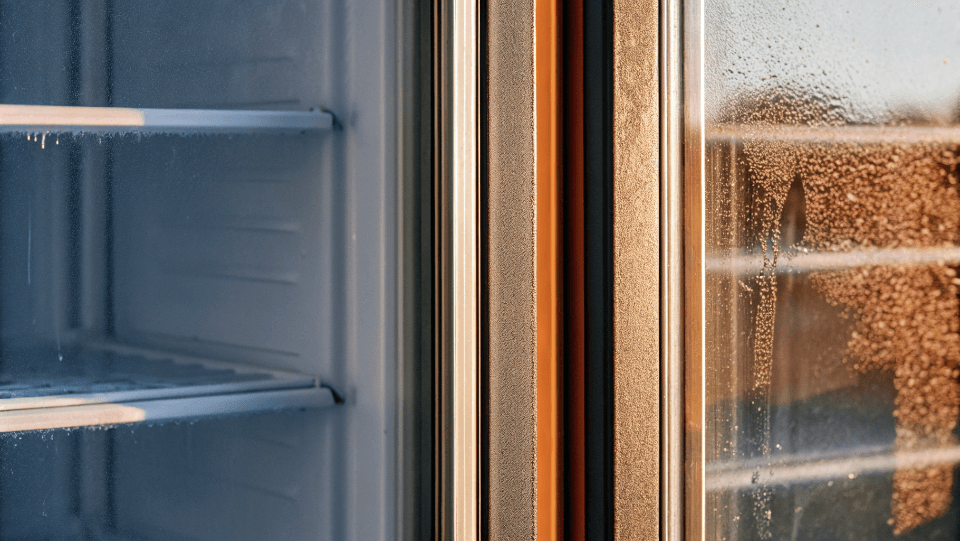
When we manufacture these units in my factory, the door is the most critical component. It’s not just a simple pane of glass. It has to balance visibility with insulation. A poorly made door will cause your energy bills to skyrocket.
Key Components from a Manufacturer's View
From an engineering perspective, three parts make a quality glass door fridge.
- The Glass: We almost always use double-pane, or even triple-pane, tempered glass. The space between the panes is filled with an inert gas like argon to improve insulation. We also apply a Low-E (low-emissivity) coating. This invisible layer reflects heat, keeping it out of the fridge and keeping the cold air in. Tempered glass is also a safety feature; if it breaks, it shatters into small, dull pieces, not sharp shards.
- The Cooling System: Most glass door units use a fan-forced cooling system. This is crucial because it circulates cold air evenly throughout the cabinet. So, a drink at the top is the same temperature as one at the bottom.
- The Shelving: Shelves are typically made of heavy-duty, coated wire. This design is strong, allows for better air circulation around the products, and is easy to clean. They are also adjustable to fit different-sized bottles and cans.
Which is better, a glass door or solid door refrigerator?
Can't decide between a glass door and a solid door? The wrong choice can hurt your energy bill or your sales, so it’s a big decision. Let’s find the best fit for you.
Glass door refrigerators are better for merchandising and increasing sales through product visibility. Solid door refrigerators are superior in energy efficiency and are best for back-of-house storage where products do not need to be displayed. The choice depends entirely on the refrigerator's location and purpose.
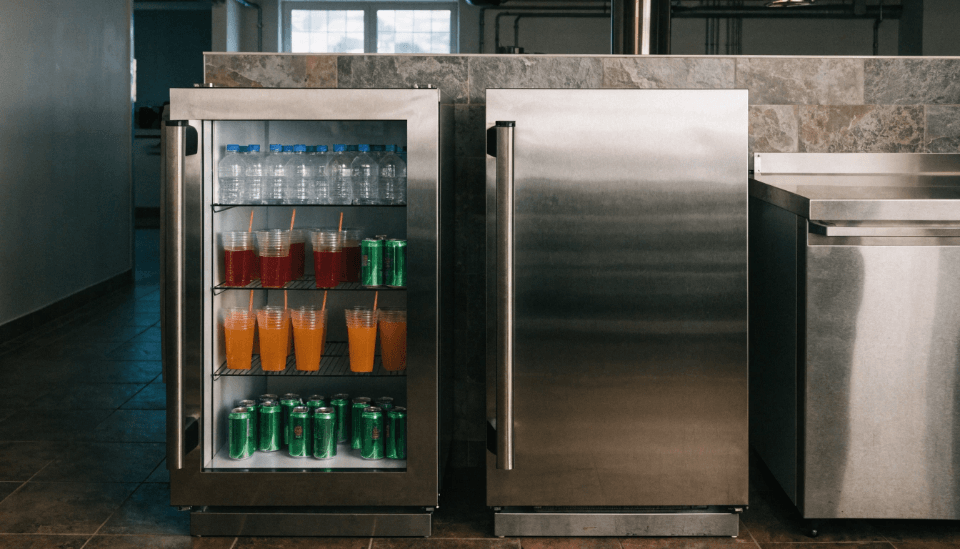
I often advise clients on this exact question. For a customer-facing area, a glass door is almost always the right answer. For a business which focuses on drink selling, a stylish glass door beverage cooler would perfectly complement his main product line. But for his warehouse, where he stores bulk inventory, solid door units are the only practical choice to manage electricity costs. It's about putting the right tool in the right place.
The Right Door for the Job
Let's break down the decision with a clear comparison. Think about your specific need as we go through this table. For a business owner, every detail affects the bottom line.
| Feature | Glass Door Refrigerator | Solid Door Refrigerator |
|---|---|---|
| Visibility | Excellent. Customers see products. | None. Must be opened to see inside. |
| Impulse Sales | High. Encourages unplanned buys. | Low to none. |
| Energy Efficiency | Lower. Glass is a poor insulator. | Higher. Better insulation. |
| Best Use Case | Customer-facing areas, merchandising. | Kitchens, storage rooms, back-of-house. |
| Initial Cost | Generally higher due to glass tech. | Generally lower. |
Ultimately, a glass door is an investment in marketing, while a solid door is an investment in efficiency. Many businesses, like restaurants and grocery stores, use both. They use glass doors in the front to sell and solid doors in the back to store.
What are the disadvantages of glass door refrigerators?
Do you think a glass door fridge is the perfect solution? Be careful, as some hidden downsides can affect your energy bills and add to your daily tasks. Let's look at the drawbacks.
The main disadvantages are lower energy efficiency, leading to higher electricity costs. The glass requires constant cleaning to maintain a clean appearance. They are also susceptible to condensation and must be placed carefully, away from direct sunlight.
In my experience helping clients, these are the three issues that come up most often. A new owner gets excited about how great their products look but then is surprised by the first utility bill or the constant need for wiping down the door. Being aware of these points helps you manage the unit effectively and avoid any surprises. A beautiful display a customer won't touch because it looks dirty is worse than no display at all.
The Trade-offs for Visibility
Every benefit has a cost. Here are the three main ones to consider.
1. The Energy Cost
Glass is simply not as good at insulating as a foam-filled solid door. Even with double or triple panes and Low-E coatings, some energy will be lost. This means the compressor has to run more often to maintain the set temperature, which uses more electricity.
2. The Maintenance Factor
The glass door is a window into your business. Fingerprints, smudges, and dust show up easily and can make your products look unappealing. You have to commit to cleaning the glass daily, sometimes multiple times a day in a high-traffic area. The inside also needs to be perfectly organized at all times.
3. The Location Problem
You cannot place a glass door refrigerator just anywhere. If it’s in direct sunlight, two things happen. First, the sun's heat will work against the cooling system, making it run constantly. Second, UV rays can damage the labels and even the contents of the drinks over time. You need to find a spot with no direct sun exposure.
What is a beverage refrigerator?
Is a beverage fridge just another name for a small refrigerator? Using a regular home fridge for your business's drinks can cause uneven cooling, wasted space, and slow service.
A beverage refrigerator, often called a beverage cooler or merchandiser, is a unit engineered specifically for drinks. It features powerful fan-forced cooling for temperature consistency, and its adjustable shelving is designed to maximize space for cans and bottles, unlike a standard refrigerator.
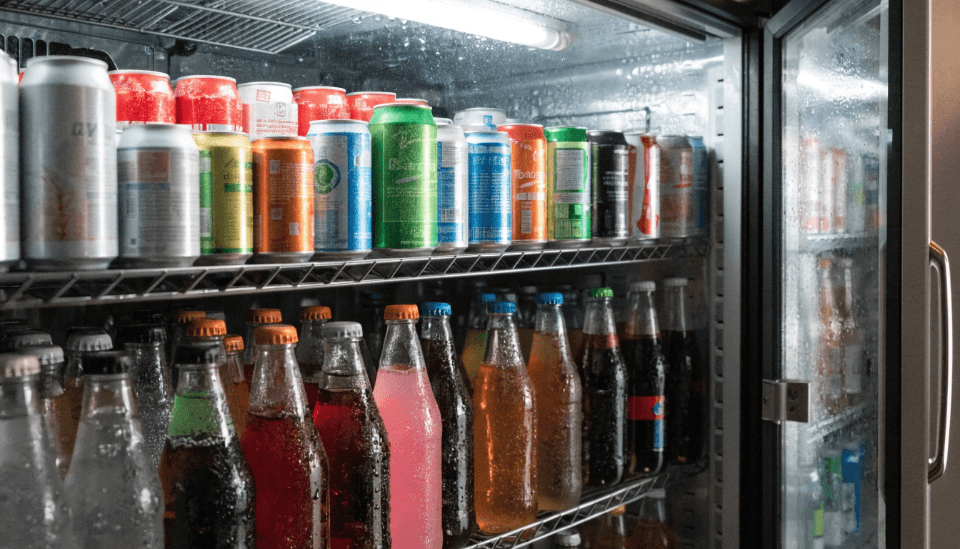
The difference is in the details. When we design and build these coolers, we focus on what a beverage-selling business needs: speed, capacity, and consistency. A regular dorm fridge might keep a few cans cold, but it can't handle the demands of a commercial environment. For example, after a customer opens the door and takes a drink, a beverage cooler's fan system brings the temperature back down very quickly. A standard fridge cannot recover that fast, which can lead to drinks not being cold enough during busy periods.
Designed for Drinks: The Inside Story
Let's look at the specific features that separate a true beverage refrigerator from a generic one.
Temperature Range and Control
Beverage coolers are optimized for drinks, typically holding a temperature between 32-50°F (0-10°C). This range is perfect for sodas, water, and beer. A precise digital thermostat is essential for commercial use, so you can set and forget the exact temperature your products need.
Airflow and Cooling Power
As I mentioned, nearly all commercial beverage coolers use fan-assisted cooling. This dynamic system blows cold air throughout the interior, eliminating the warm spots you often find in static cooling fridges (like most home units). This ensures every single bottle or can you sell is perfectly chilled.
Shelf and Storage Design
Look inside a beverage cooler, and you'll see wire shelves. This isn't just a cost-saving measure. It allows cold air to flow freely around every single item. The shelves are also designed with spacing and depth in mind to maximize the number of standard cans or bottles you can fit inside. It is all about maximizing your sellable inventory in a limited space.
Conclusion
A glass door beverage fridge is a key sales tool. It showcases products to attract customers and drive impulse buys, making it an essential asset for any retail business.