
Your new smart appliance broke down way too soon. It’s frustrating when expensive tech fails. I'll explain why older models often prove more reliable and what this means for you.
Older appliances often last longer because they were built with simpler, more robust mechanical parts. Manufacturers focused on durability over features, facing less pressure from intense price competition. This resulted in products designed to stand the test of time, unlike many complex, cost-optimized modern appliances.
That simple refrigerator from my childhood is a perfect example. It's been with my family for over 20 years and still runs. This personal experience made me wonder about the big shift in manufacturing quality. To really understand what happened, we need to dig deeper into the reasons behind this change.
Why are old appliances better?
Remember when appliances were a one-time purchase for many years? Now they seem designed to fail. Let's break down the tangible reasons why older machines were so much more dependable.
Old appliances are often better due to simpler mechanics, higher-quality materials, and a manufacturing focus on durability. They lacked complex electronics, which are common failure points today. The higher initial cost also reflected a build quality designed for longevity, not just features or cost savings.
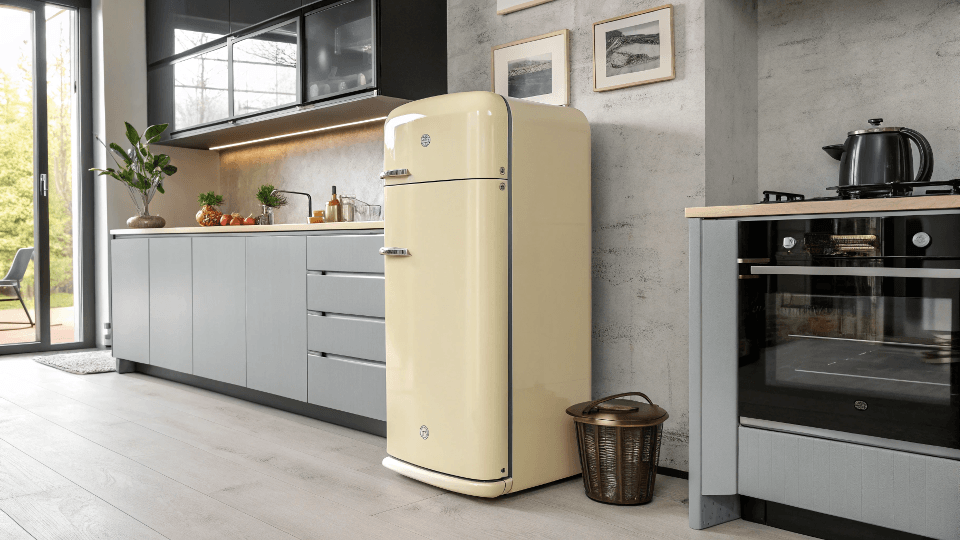
When I was five years old, my family bought a simple, two-door refrigerator. It was about as tall as I was. It only had a mechanical dial to control the temperature, which we almost never touched. That single refrigerator moved with us three times and, after more than 20 years, it still works perfectly. This is a great example of an era focused on simple, reliable design. Today's appliances are filled with circuit boards, dozens of sensors, and fancy touch screens. Each of these complex parts is a potential point of failure. The old models used heavy-duty mechanical components that could handle decades of use. It was a completely different manufacturing philosophy: build it once, and build it to last forever.
| Feature | Old Appliances (90s-00s) | New Appliances (2020s) |
|---|---|---|
| Controls | Simple Mechanical Dials | Digital Touchscreens, Wi-Fi Apps |
| Key Parts | Over-engineered, Robust Metal | Cost-optimized Plastics, Complex Circuits |
| Typical Lifespan | 15-30 years | 5-10 years |
| Repair Style | Simple, easy to find parts | Complex, often requires a specialist |
Why don't new appliances last?
You invested in a top-of-the-line smart appliance. Now you dread the day it suddenly stops working. I'll explain the factors that lead to shorter lifespans in today's products.
New appliances don't last due to intense price competition, the use of cheaper components, and complex electronics. To keep costs low and add more features, manufacturers often sacrifice durability. This practice leads to products with shorter lifecycles, encouraging more frequent replacement from consumers.
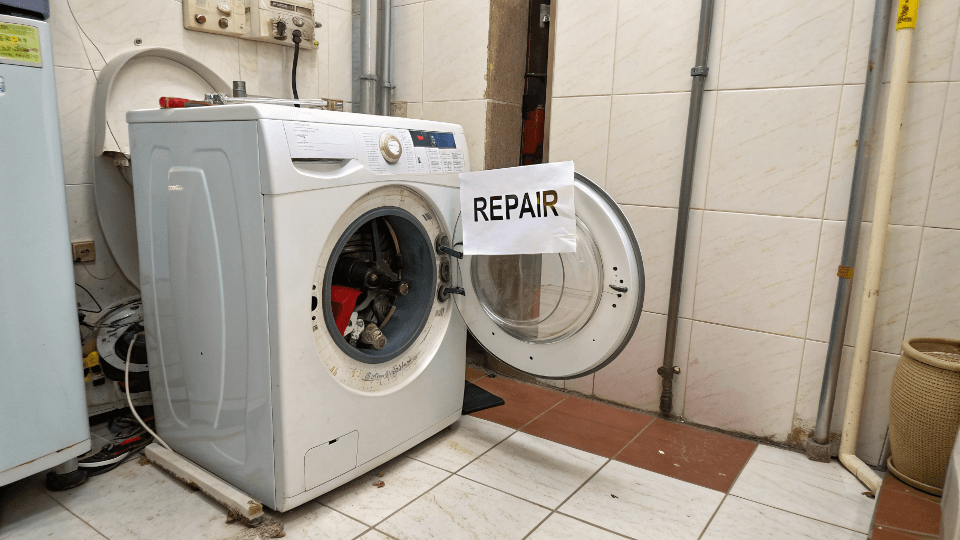
I learned this lesson the hard way. We bought a big, new 600L smart refrigerator for our home. It had everything we could imagine: special food preservation compartments, a micro-freezer, touch controls, and even a phone app. But in less than two years, the compressor failed. This is a major, expensive repair. While we waited for the service technician, we had to cram all our food back into our small, 20-year-old fridge. This experience shows the problem clearly. Rising labor costs and fierce market competition force companies to cut corners wherever they can. They pressure their suppliers for cheaper and cheaper parts. These parts work for a while, but they aren't built for the long haul. The focus has shifted from durability to exciting new features and low initial prices, leaving customers with unreliable products. It is the tough reality of the current global market.
What is the 50 50 rule for appliances?
Your trusty appliance finally gave up. You're stuck deciding between a costly repair or a brand-new model. Let me introduce a simple rule to guide your important choice.
The 50-50 rule is a guideline for deciding whether to repair or replace an appliance. If the appliance is more than 50% through its expected lifespan and the repair cost is more than 50% of the price of a new one, you should replace it.
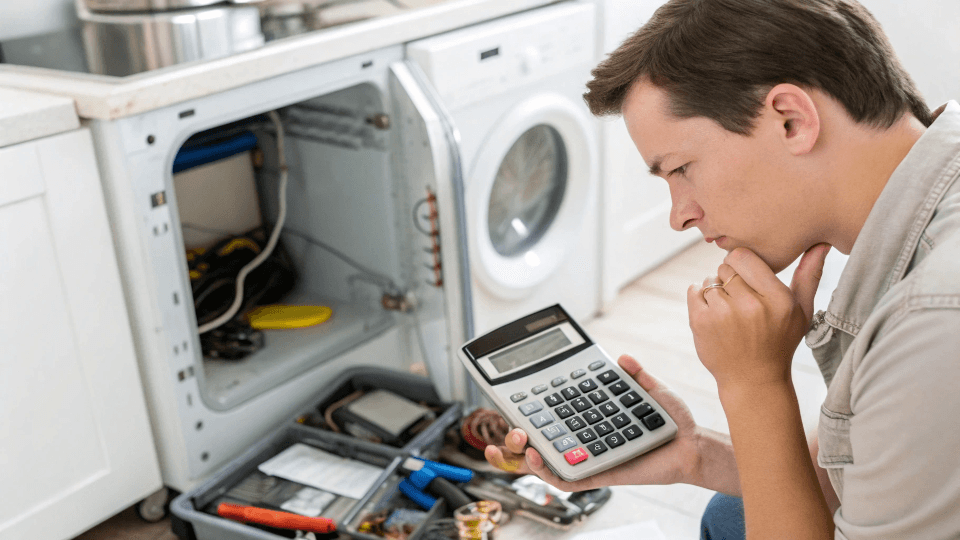
This rule helps you avoid throwing good money after bad. Let's use an example. Imagine your washing machine is 8 years old and has an expected lifespan of about 12 years. This means it is more than 50% through its life. A repair technician gives you a quote of $400 for a fix. A new, comparable washer costs $700. Since the repair cost ($400) is more than 50% of the replacement cost ($350), the rule suggests buying a new machine. With older appliances, repairs were often simple and parts were cheap, making them worthwhile. For today's complex machines with expensive electronic parts, replacement is often the more logical choice. This is especially true when the appliance is already halfway to its (much shorter) expected end.
Applying the 50-50 Rule:
- Check the Age: Is the appliance over 50% of its expected lifespan? (e.g., 6+ years for a 10-year washing machine)
- Check the Cost: Is the repair bill more than 50% of a new one's price?
- Make a Decision: If you answer "yes" to both questions, it is probably time to replace it.
Do older appliances use more electricity?
You're happy your old refrigerator is still running strong. But you worry if its reliability comes at a high price on your monthly energy bill. Let's clear this up with facts.
Yes, older appliances almost always use more electricity than new ones. Modern appliances are designed to meet strict energy efficiency standards, like Energy Star. While an old refrigerator might be more durable, a new, energy-efficient model can save you significant money on your utility bills over time.
This is the one area where new appliances clearly win. There is no debate: older appliances are much less energy-efficient. A refrigerator from the early 2000s, for example, can easily use two to three times more electricity than a brand new Energy Star certified model. Over a year, that difference can add up to a lot of money and a much higher electricity bill. This creates a difficult choice for customers. Do you stick with the reliable old machine that costs more to run every month? Or do you buy a new, efficient one that might break down in five years? As someone who runs a factory, this is the key challenge we face. The ultimate goal is to build products that combine the legendary durability of the past with the amazing energy efficiency of the present.
| Aspect | Old Appliance | New Appliance |
|---|---|---|
| Durability | High | Low to Medium |
| Repairability | High | Low |
| Energy Use | High | Low (Energy Star) |
| Long-Term Cost | High (Energy) + Low (Repair) | Low (Energy) + High (Replacement) |
Conclusion
In the end, old appliances offer unmatched durability while new ones provide efficiency and features. The best choice depends on balancing reliability with modern performance and running costs.