
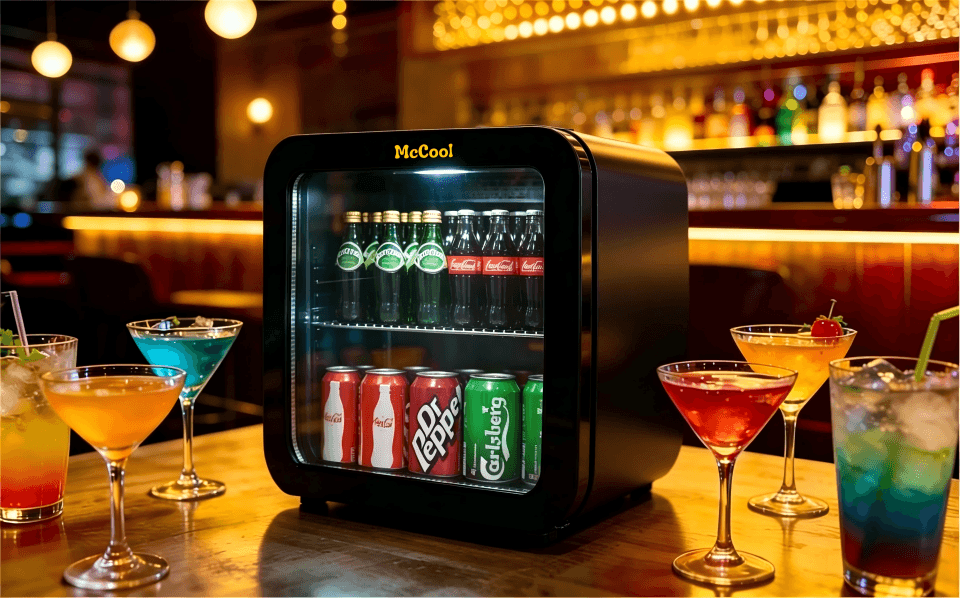
Choosing the wrong bar fridge can lead to warm drinks and frustrated guests. You need a reliable cooler, but the options are confusing. This guide makes the choice simple.
The best mini fridge for bar service is actually a beverage cooler. It uses a compressor for powerful cooling, maintains a temperature of 3-10°C, and has adjustable shelves designed specifically for cans and bottles. A glass door is ideal for displaying your drinks and making selection easy.
I’ve spent my life in the refrigeration industry, from working on a factory floor to building my own. I know what separates a great cooler from a disappointing one. A client like you who is building a brand, needs to get this right. Your reputation depends on the quality of the products you source. Let's break down exactly what you need to look for, so you can choose a beverage fridge that makes your customers happy and keeps them coming back. This is how you build a number-one brand.
What’s the Real Difference Between a Beverage Cooler and a Regular Mini Fridge?
They look similar, so it's easy to make a mistake. But buying a standard mini fridge for beverages leads to poorly chilled drinks and unhappy customers. Let me clarify the key differences.
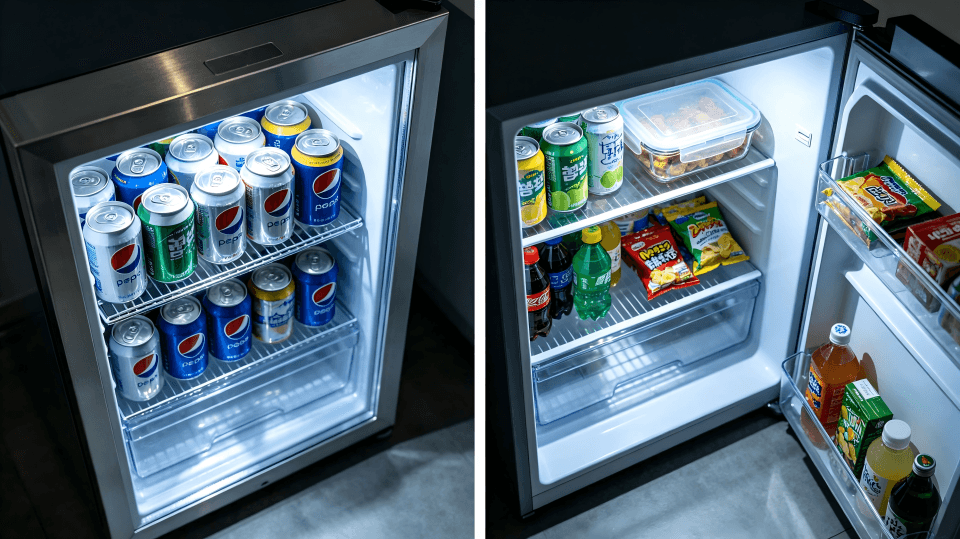
A true beverage cooler is engineered for drinks, keeping them at an ideal 3-10°C with fan-forced air for even chilling. A regular mini fridge is a food refrigerator, aiming for colder, food-safe temperatures (0-4°C), which can actually over-chill and ruin the taste of many drinks.
When I consult for my clients, this is the first thing we discuss. A customer buying a "bar fridge" expects it to perform like a beverage cooler, not a food fridge. The internal design and cooling purpose are completely different. Using a standard mini fridge can lead to frozen cans near the cooling plate and warmer drinks by the door. This inconsistency is bad for your product and your brand's reputation. For your appliance brand, sourcing a product with the right specifications is crucial. You are not just selling a look; you are selling a function. Here’s a simple breakdown to show your suppliers.
| Feature | Beverage Cooler | Regular Mini Fridge |
|---|---|---|
| Ideal Temperature | 3-10°C (38-50°F) | 0-4°C (32-40°F) |
| Purpose | Chilling drinks (beer, soda) | Preserving food |
| Shelving | Adjustable wire/glass for cans | Fixed shelves, door compartments |
| Airflow | Often fan-assisted for even cooling | Usually static cooling |
| Freezer | No | Often includes a small freezer box |
Should You Choose a Glass Door or a Solid Door Model?
This seems like a simple aesthetic choice, but it has a big impact. A glass door looks great but can be less efficient, while a solid door hides your collection. Let's weigh the pros and cons.
For most bar applications, a glass door is the superior choice. It allows you to display your beverage selection, making it easy for you or your guests to choose without opening the door. A solid door offers better insulation and energy efficiency, but you lose that crucial display function.
In my experience, looks sell. I once helped a small cafe owner who was struggling with drink sales. Her fridge was hidden behind the counter. We swapped it for a glass-front beverage cooler placed on the counter. Her drink sales jumped by over 15% in a month because customers could see the cold, appealing options.
Glass Door Models
A glass door turns the fridge into a display case. It's perfect for showing off craft beers or a colorful array of sodas. However, not all glass doors are equal. When you source from a factory, you must insist on a double-paned, low-E (low-emissivity) glass door. This type of glass has a special coating that reflects heat, preventing condensation and improving insulation. It keeps the cold in and the heat out, making it almost as efficient as a solid door.
Solid Door Models
A solid door provides the best possible insulation. This means it uses less energy to stay cold, which saves money over time. For a brand focused on retro aesthetics like yours, a solid door with a cool, vintage-style handle can be a huge selling point. It creates a clean, classic look. The downside is purely functional: you have to open the door every time you want to see what's inside, which lets cold air escape.
How Does Capacity and Shelving Impact Beverage Service?
You think you bought a large fridge, but it won't fit your favorite bottles. The problem isn't just size; it's the internal layout. The wrong shelving makes half the space useless.
Focus on usable capacity, not just liters. A well-designed 90-liter cooler with adjustable shelves might hold more than a poorly designed 120-liter one. Look for removable or adjustable shelving that lets you customize the space for tall bottles, short cans, and everything in between.
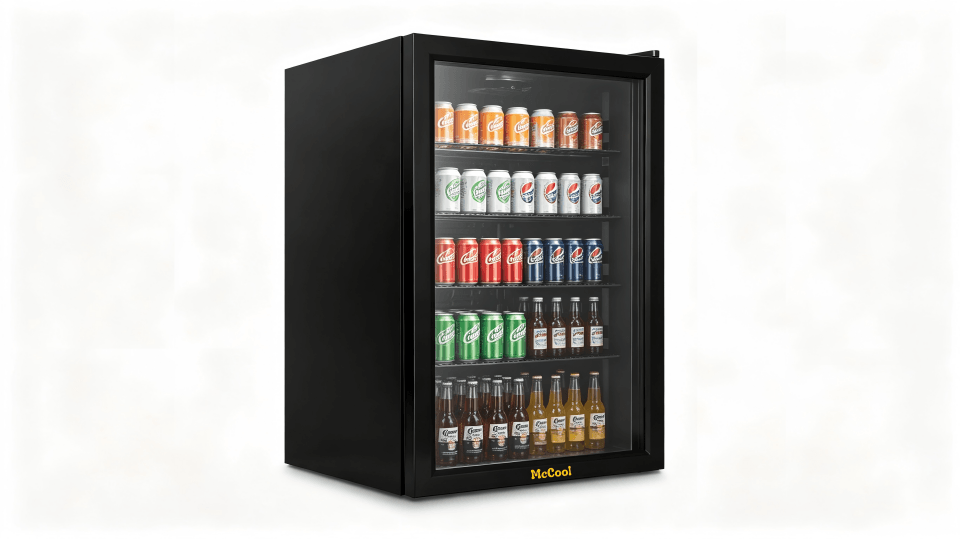
When I'm inspecting a new factory for a client, I don't just look at the spec sheet. I bring a box of standard cans and wine bottles with me. I physically test the layout. Can I stand a wine bottle upright? How many cans can fit on one shelf without wasting space? These are the real-world questions your customers will have. For online sales, where customers can't test it themselves, clearly stating the "can capacity" (e.g., "Holds 120 standard 12oz cans") is much better marketing than just listing the liters.
Here’s how different shelf types can impact usability:
| Shelf Type | Best For | Pros | Cons |
|---|---|---|---|
| Adjustable Wire | Cans and general use | Promotes better air circulation | Small or unstable items can tip |
| Adjustable Glass | Bottles and mixed items | Easy to clean, stable surface | Can slightly block vertical airflow |
| Scalloped/Notched | Wine or champagne bottles | Securely holds bottles on their side | Not versatile for other items |
For a versatile beverage cooler, a combination of flat, adjustable shelves is best. This gives the user the freedom to create the perfect layout for their collection.
What Cooling Technology is Really Best for a Bar Fridge?
All fridges cool, but the technology inside makes a huge difference. A noisy or weak cooler can ruin your bar's atmosphere and fail to keep drinks cold. Let me explain the tech inside, from a factory owner's perspective.
For any serious beverage service, a compressor-based cooling system is the only way to go. It's powerful, efficient, and reliable, easily handling frequent door openings and hot summer days. Thermoelectric coolers are quieter but are much weaker and cannot be relied upon for consistently cold drinks.
As someone who built a factory producing these units, this is not debatable for me. We produce compressor units almost exclusively for beverage coolers. Here's why.
Compressor Cooling
This is the same technology used in your full-size kitchen refrigerator, just smaller. It uses a refrigerant and a compressor to actively pump heat out of the fridge.
- Pros: It's powerful. It can reach and maintain low temperatures (like 3°C) even when your house is warm. It also recovers its temperature very quickly after you open the door to grab a drink. This is essential in a bar setting.
- Cons: It produces a slight hum and vibration when the compressor is running. However, modern compressors are very quiet.
Thermoelectric Cooling (Peltier)
This technology uses an electric current passed through a special module to move heat from one side to the other.
- Pros: It's nearly silent and has no vibrations, which is why it's sometimes used for high-end wine preservation.
- Cons: It's weak. Its cooling power is directly tied to the ambient room temperature. It can typically only cool to about 15-20°C below the room's temperature. If your bar is 25°C, it might only cool drinks to 10°C, which is not cold enough for a beer. It's also very inefficient.
I strongly advise you to only source compressor-based models for your bar and beverage lineup. Your brand's reputation rests on delivering a cold drink every time.
Conclusion
Choose a real beverage cooler, not a mini-fridge. Pick a door style for display or efficiency, check for adjustable shelves, and always insist on a powerful compressor cooling system.