
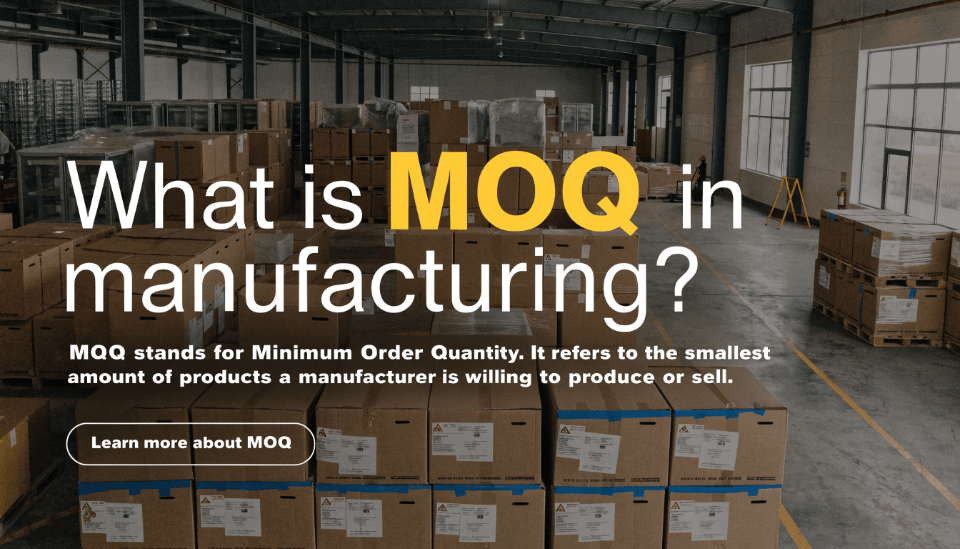
Struggling with high Minimum Order Quantities from suppliers? This can tie up your cash and warehouse space. Understanding MOQ helps you order smarter and grow your business.
MOQ stands for Minimum Order Quantity. It's the fewest number of units a factory requires you to buy in a single order. For commercial refrigeration, this often means a full container's worth of products to make a production run profitable for the manufacturer.
I remember my early days, staring at MOQ numbers that seemed impossible. It felt like a barrier designed to keep small players out. But it's not a secret code. Understanding why MOQs exist is the first step to mastering your sourcing strategy. It helps you make them work for you, not against you. Let's break it down together so you can order with confidence.
What Factors Influence a Factory's MOQ?
Ever wonder why MOQs seem so random and high? It makes planning difficult and can kill a great new product idea. Understanding the factory's costs helps you see the logic.
A factory's MOQ is based on real costs. This includes the minimum amount of raw materials they must buy, the cost of setting up machinery for a production run, and packaging. It's about efficiency; smaller runs mean higher per-unit costs, making them unprofitable for the factory.
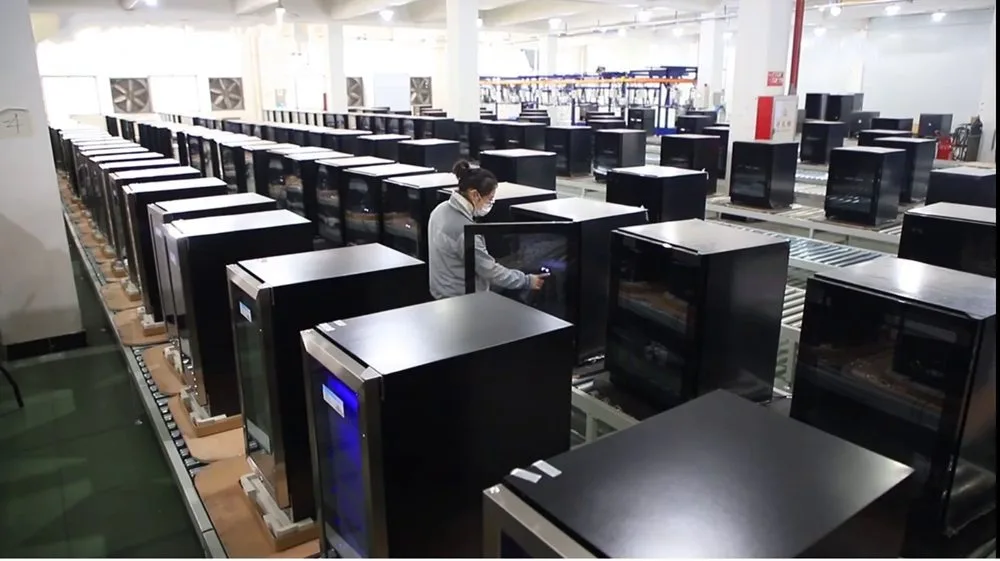
When I ran my factory, every production run was a careful calculation. It was never about blocking small buyers. It was about business survival. The main drivers for MOQ are always tied to the factory's own supply chain and production process. I want to pull back the curtain and show you exactly what goes into that number.
Raw Material MOQs
Our suppliers of steel, plastic, and compressors had their own MOQs. We had to buy a certain amount of sheet metal or a specific number of compressors. We then have to pass this requirement down to our customers. A factory can't order just 10 special compressors; they might have to order 500.
Production Line Setup
Changing a production line from making one refrigerator model to another takes time, labor, and resources. It's a fixed cost. To make it worthwhile, we needed to produce enough units to spread that cost out. A small run would make each refrigerator far too expensive to produce.
Customization Costs
If you want a custom retro color or your logo printed on the unit, that requires special materials and processes. For example, the paint supplier will have a minimum order for that specific shade of green you need for your brand. This is often the biggest driver for higher MOQs on custom products.
| Cost Factor | Explanation | Impact on MOQ |
|---|---|---|
| Raw Materials | The supplier of parts (e.g., compressors, steel) has its own MOQ. | High. The factory must order enough parts for a viable run. |
| Machine Setup | The cost and time to configure equipment for a specific model. | High. This fixed cost must be spread across many units. |
| Customization | Special colors or branding require unique materials from other suppliers. | Very High. The MOQ of the custom part becomes the new MOQ. |
How Can I Negotiate a Lower MOQ with My Supplier?
Want to test a new product but the MOQ is just too high? You risk a huge investment on an unproven item and it feels like a roadblock. Negotiation is possible with the right approach.
To negotiate a lower MOQ, build a strong relationship with your supplier and show them your long-term business plan. You can offer to pay a slightly higher unit price for a smaller order or consolidate your order with other non-competing buyers. A clear forecast helps them believe in you.
I have been on both sides of the negotiation table. As a factory owner, I needed to see a reason to break my production rules. As a buyer, I needed flexibility. The key is to turn the conversation from a simple "no" into a collaborative "how can we make this work?". Negotiation is a partnership, not a battle.
Show Your Value as a Partner
Don't just be an email address. A factory will be more flexible with a partner they believe will place larger orders in the future. Share your marketing plans and sales forecasts. Show them your website and your brand vision. I once worked with a small brand starting out, and their initial small order for 50 units turned into a multi-container partnership within a year because they showed me a clear plan for growth.
Offer a Compromise
Suggesting a slightly higher price per unit for a smaller order is a classic, effective move. It shows you understand that their costs increase on smaller runs and you are willing to share that cost. This simple gesture proves you are a serious business person and makes the factory more willing to help.
Leverage Relationships
A good relationship is your best tool. Don't just email. Visit the factory if you can. Have video calls. Show them you're a serious, long-term partner, not just a one-time buyer looking for the lowest price. Trust is the most valuable currency in this business.
| Negotiation Tactic | Why It Works | My Experience |
|---|---|---|
| Pay a Higher Price | Compensates the factory for lower efficiency on a small run. | Most factories will accept this. It's a straightforward business transaction. |
| Combine Orders | The factory still gets a large total order, even if for different items. | Works well if you order multiple product lines from the same factory. |
| Provide a Forecast | Shows the small order is a test for future, larger business. | This builds trust. I've given many new brands a chance based on a solid plan. |
Are There Alternatives to Meeting a High MOQ?
You found the perfect retro refrigerator but you simply can't meet the MOQ. It can feel like your business dream is hitting a wall before it even starts. But there are creative ways to get products.
Yes, there are alternatives. You can find a trading company that consolidates orders from multiple buyers. You could also look for a smaller factory with more flexible requirements. Sometimes, factories have overstock or canceled orders they are willing to sell in smaller quantities.
I have seen many small and medium-sized businesses get their start this way. You do not always have to go straight to a big factory and place a massive order. You need to think creatively to get your foot in the door.
Work with Trading Companies
These companies are sourcing experts. They have relationships with many factories and often place huge, consolidated orders for various clients. They can add your smaller quantity to their larger one. You might pay a slightly higher price per unit for their service, but you get access to the product without the high MOQ. This is a fantastic way to test the market with a new product.
Find Smaller Factories
Not all factories are massive operations like my old one. Smaller, newer factories are often hungrier for business. They are more willing to accept smaller orders to build their client base and reputation. You may need to invest more time in quality control, but the flexibility they offer can be a huge advantage when you are starting out.
Look for 'Standard' or 'Stock' Products
Factories sometimes produce their own standard models for stock, without any branding. Since these aren't custom-made for a specific client, they are often willing to sell smaller quantities directly from their warehouse. This is perfect if you don't need heavy customization and want to test a product quickly.
Conclusion
MOQ isn't a wall, but a hurdle you can learn to clear. Understand the 'why', negotiate smartly, and explore alternatives to grow your business without overextending your finances.