
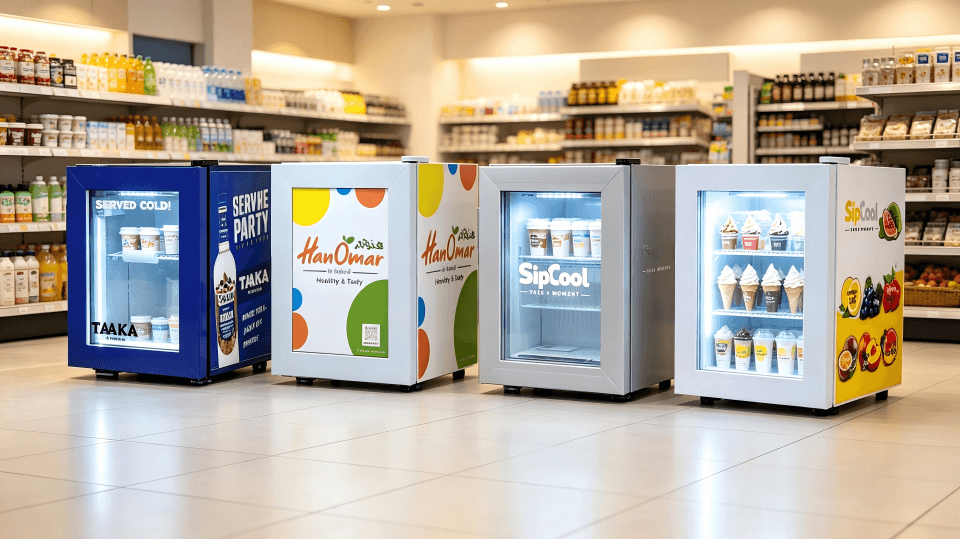
Choosing an ice cream freezer feels overwhelming. A bad choice means lost money and spoiled products. I'll help you pick the perfect one for your business.
To buy the right ice cream freezer, first assess your capacity needs based on sales volume. Then, choose a display type that enhances your brand and makes the product look appealing. Finally, consider technical specs like temperature range and energy efficiency to ensure quality and control costs.
An ice cream freezer is not just a box to keep things cold. It's one of your most important sales tools. When a customer walks in, the freezer is often the first thing they look at. It tells them about your brand and the quality of your treats. Getting this choice right can make a huge difference to your bottom line. We're going to break down exactly what you need to look for, step by step, so you can buy with confidence.
What Size and Capacity Freezer Should You Get?
Buying the wrong size freezer is a common mistake. You either waste money on unused space or run out of stock during a rush. Let's find your perfect fit.
To choose the right size, first measure your available floor space. Then, calculate capacity based on your number of flavors and weekly sales volume. Always plan for at least 20% extra capacity to handle peak seasons and future growth.
When I started my first factory, space was my biggest problem. I learned quickly that you must plan your equipment around your space, not the other way around. Let's dig deeper into how you can get this right.
Calculating Your Capacity Needs
Don't just look at the liter size listed by the manufacturer. Think in terms of the number of tubs your freezer can hold. If you sell 10 flavors and want to keep at least two tubs of each on hand, you need space for 20 tubs. Count your weekly tub sales during your busiest month and use that as a baseline. For a business owner who sells online, having a large-capacity chest freezer in the warehouse for backstock and a smaller, stylish display freezer for marketing photos might be the best combination.
Thinking About Your Space and Portability
Measure the spot where the freezer will go. Remember to leave space around it for ventilation, which is crucial for the compressor to work efficiently. Also, consider portability. Most freezers come with casters (wheels). This is not a small detail. You will need to move the freezer to clean under it or to rearrange your store layout for a promotion. A freezer that is easy to move gives you flexibility, which is a big advantage for a growing business.
| Freezer Type | Typical Capacity (5-Liter Tubs) | Best For |
|---|---|---|
| Small Countertop | 4-6 Tubs | Small cafes, testing new flavors |
| Mid-Size Chest | 10-16 Tubs | Most ice cream parlors, high-traffic spots |
| Large Upright Display | 20+ Tubs | Supermarkets, large dedicated dessert shops |
How Can Your Freezer Boost Your Brand and Sales?
Your ice cream looks amazing but isn't selling. Customers walk past without noticing what you offer. It's time to turn your freezer into a powerful marketing tool.
A freezer boosts sales with a curved glass front for better visibility, bright LED lighting to make colors pop, and custom branding that tells your story. This combination grabs attention and makes your ice cream look irresistible to customers.
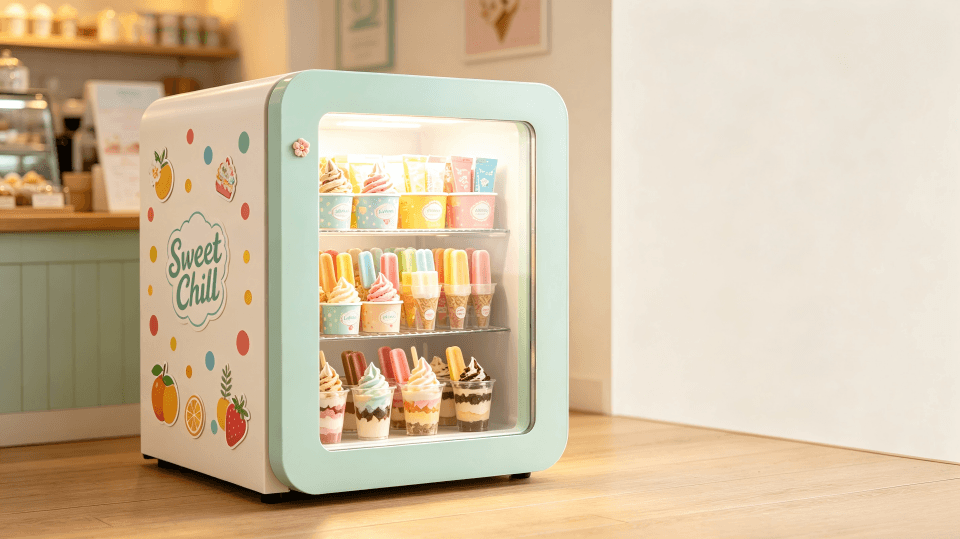
A client of mine, who runs a small gelato shop, saw a 30% sales increase in the first month after upgrading his freezer. He went from a standard chest freezer to a curved glass display model with his logo on it. The product didn't change, but how customers saw it did. This is the power of visual merchandising.
Display Type Matters
The style of your freezer should match your brand. For a modern, sleek shop, a freezer with straight, clean lines works best. For a brand focused on retro appliances, finding a freezer with rounded corners and vintage-style hardware is key. If you can't find the perfect one, remember that a simple freezer can be customized. A well-designed vinyl wrap can transform a generic white freezer into a centerpiece that reinforces your retro brand identity.
Lighting is Your Secret Weapon
Never underestimate the power of good lighting. Older freezers used fluorescent bulbs that could be dull and change the color of your products. Modern freezers use LED lighting. LEDs are bright, use less energy, and produce very little heat, which is important for keeping your ice cream at the perfect temperature. Good lighting makes the vibrant colors of your strawberry sorbet and mint chocolate chip pop, making them look fresh and delicious. It draws the eye and makes people hungry.
Branding the Freezer Itself
Your freezer offers valuable advertising space. Most manufacturers offer options to add your logo and brand colors directly to the unit. This makes your freezer instantly recognizable and reinforces your brand. When people take photos of their ice cream, your branded freezer is often in the background. This is free marketing that works for you 24/7. It shows you are a professional and serious business.
What Technical Features Actually Matter for an Ice Cream Freezer?
The spec sheets for freezers are full of technical jargon. You worry about paying for features you don't need or buying an unreliable unit. Let's focus on the specs that truly matter.
The most important technical features are a consistent temperature range between -10°F and -20°F (-23°C to -29°C), manual defrost to protect ice cream quality, and high energy efficiency to keep your electricity bills low.
When I was building refrigerators, I learned that the simplest, most reliable components are often the best. The same is true for freezers. Fancy features can be nice, but if the freezer can't hold its temperature, nothing else matters. It's about getting the fundamentals right to protect your product and your profit.
The Right Temperature Range
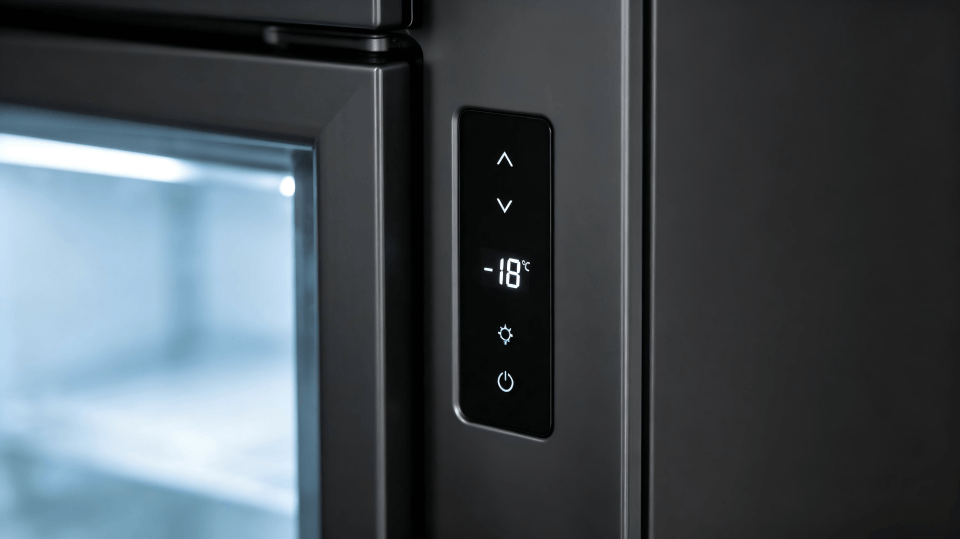
Ice cream is delicate. If it's too warm, it gets soft and melts. If the temperature fluctuates too much, large ice crystals form, ruining the smooth texture. Look for models with digital temperature controls so you can set and monitor the temperature precisely. This ensures you are always serving your ice cream at its best.
Manual vs. Auto Defrost
This is a critical choice. Most home freezers are "frost-free" or "auto-defrost." This is convenient, but it works by periodically warming the inside of the freezer to melt away ice. This warming cycle is terrible for ice cream quality. A manual defrost freezer requires you to empty it and turn it off to melt ice a few times a year. While it's more work, it provides a more stable, colder environment that protects the texture of your ice cream. For a serious ice cream business, manual defrost is almost always the better choice.
| Defrost Type | Pros | Cons |
|---|---|---|
| Manual Defrost | More stable temperature, better for ice cream quality, more energy efficient. | Requires periodic downtime and labor to defrost. |
| Auto Defrost | No manual effort needed, always frost-free. | Temperature fluctuations can cause ice crystals, uses more energy. |
Understanding Energy Efficiency
A commercial freezer runs all day, every day. It is one of the biggest energy users in your shop. A cheap, inefficient freezer might save you money on the purchase price, but it will cost you much more in the long run on your electricity bills. Look for energy-efficiency ratings and ask the manufacturer for the unit's power consumption (usually in kWh/24h). Investing in a more efficient model pays for itself over time and is better for your bottom line.
Conclusion
Choosing the right freezer comes down to balancing capacity, visual branding, and core performance. Get this right, and you'll protect your product, attract more customers, and grow your business.