
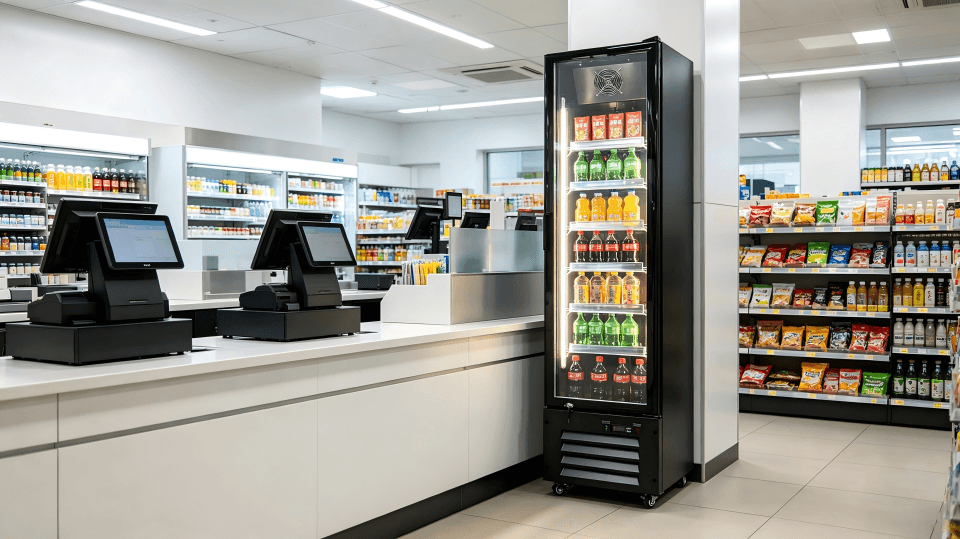
Struggling with limited floor space in your store? It's frustrating when you can't display enough products, losing out on potential sales. A slim commercial display fridge is the perfect solution to maximize revenue.
The best slim and narrow commercial fridges, or beverage coolers, use powerful cooling to keep drinks ice-cold, bright LED lighting to attract customers, and an efficient design to maximize product visibility and sales in a small footprint. They are silent salespeople for your business.
In my years of manufacturing refrigerators, I've seen countless business owners transform their sales with one simple addition. It’s not just about keeping things cold; it's about strategic selling. I remember working with a client who owned a small cafe. He placed a small, branded beverage cooler by the register, and his drink sales doubled in a month. This guide will share the secrets I've learned, helping you choose a cooler that doesn't just chill, but sells. Let's dive in.
How Can a Slim Display Cooler Boost Your Impulse Sales?
Is your checkout counter just a place to process payments? You're leaving money on the table if you're not using that valuable real estate to drive last-minute sales. It’s a huge missed opportunity.
A slim display cooler boosts impulse sales by placing cold, attractive drinks and snacks directly in a customer's line of sight at the point of sale. Bright lighting and a crystal-clear glass door make the products inside look irresistible, encouraging a purchase they didn't plan to make.
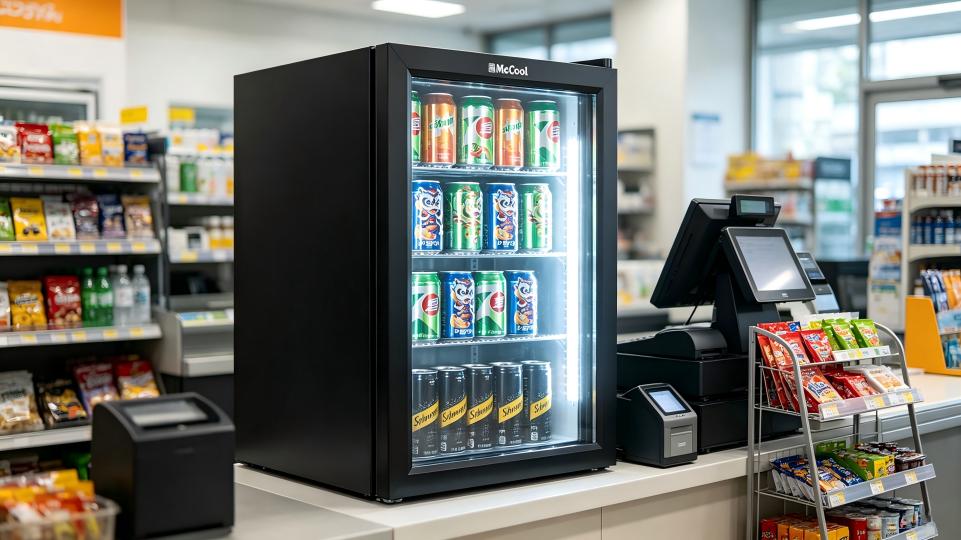
The psychology here is simple: see, want, buy. I’ve seen this work time and time again. My client, Nick, wanted to get his refrigerators into more retail spaces. I suggested he develop a branded countertop beverage cooler. By providing these to small cafes, he not only sold his coolers but also created a dedicated space for them to sell high-margin, single-serve chilled products. It’s a win-win. The key is to make the product easy to see and easy to grab. The cooler itself becomes a powerful marketing tool.
Here are the features that turn a cooler into a sales machine:
| Feature | How It Drives Impulse Sales |
|---|---|
| Bright Vertical LED Lighting | Makes the products inside "pop" and look more appealing. It draws the customer's eye. |
| Anti-Fog Glass Door | Ensures the view is never obstructed by condensation, so products are always clearly visible. |
| Strategic Placement | Placing the cooler near the checkout or in a queue line maximizes exposure to customers when they are most likely to make an impulse buy. |
| Custom Branding/Graphics | A branded cooler with your logo or a supplier's brand (like Coca-Cola) builds brand recognition and trust, encouraging a sale. |
These aren't just features; they are investments in your bottom line. A cooler in the right spot with the right lighting is one of the hardest-working employees you'll ever have.
What Technical Features Are Critical for a Commercial Display Fridge?
A broken-down fridge is a business owner's nightmare. It means spoiled product, unhappy customers, and lost sales. You need a reliable workhorse, not a constant source of stress and expensive repair bills.
For a commercial fridge, you must have a dynamic cooling system for quick temperature recovery, an energy-efficient compressor to keep costs down, and durable construction like a self-closing door and strong shelves to handle the heavy-duty cycle of a busy store.
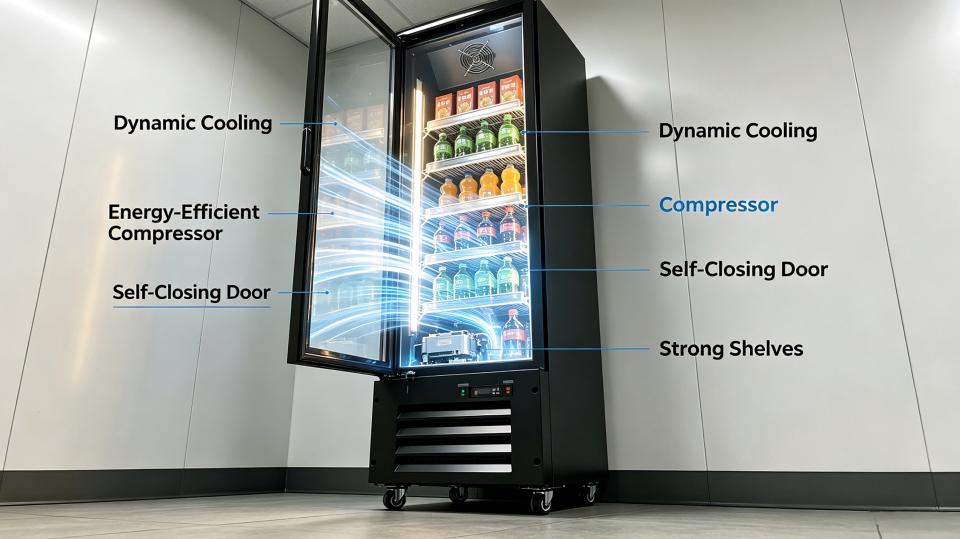
When I started my refrigerator factory, we learned this lesson quickly. Household fridges are opened a few times a day. A commercial cooler in a busy store can be opened hundreds of times. This requires a completely different engineering approach. We had to switch from static cooling to dynamic (fan-assisted) cooling. This fan circulates the cold air, ensuring that even after a customer holds the door open, the entire cabinet gets back to the target temperature quickly. This means the last drink taken out is just as cold as the first. It's a non-negotiable feature for any commercial application.
Let's break down the must-have technical specs and their business impact:
| Technical Feature | Why It's Critical for Your Business |
|---|---|
| Dynamic Cooling System | A fan circulates air for a uniform temperature. This guarantees every drink is perfectly chilled, leading to customer satisfaction and repeat business. |
| Energy-Efficient Compressor | This unit runs 24/7. An efficient compressor and modern refrigerants (like R600a) drastically cut your electricity bill, directly boosting your profitability. |
| Self-Closing Door | Prevents the door from being left open by mistake, saving energy and ensuring the products inside stay cold and safe. A huge help in a busy environment. |
| Tempered Safety Glass | Much stronger and safer than normal glass. It's built to withstand the bumps and knocks of a commercial setting, reducing the risk of costly damage. |
Don't be tempted to save a few dollars by using a residential mini-fridge. It's not built for the job, and it will fail you, costing you much more in the long run.
How Do You Choose the Right Size and Capacity for Your Business?
You know you need a slim cooler, but the choices are overwhelming. If you buy one that's too big, it won't fit the space you have. If you buy one that's too small, you'll be restocking it constantly or losing sales when it's empty.
First, carefully measure your available space—width, depth, and height—and make sure to leave at least 2-4 inches around the unit for ventilation. Then, match the capacity to your sales volume. A small countertop model is great for low volume, while a tall, slim upright cooler offers much more stock for a busier location.
This is the most common mistake I see new business owners make. They forget about ventilation. A refrigerator works by moving heat from the inside to the outside through coils, usually on the back or bottom. If you jam it into a tight space with no airflow, it will overheat, work constantly, and eventually fail. Always check the manufacturer's recommendation for clearance. Once you know the maximum dimensions you can fit, you can decide on capacity based on your needs. For Starbucks brand, a small 68-liter countertop cooler was perfect for a cafe, but for a small grocery store, we recommended a 200-liter upright slim model to hold more variety.
Here’s a quick guide to help you choose:
| Cooler Type | Typical Capacity | Best Placement | Ideal Products |
|---|---|---|---|
| Countertop Cooler | 50 - 100 Liters | On the checkout counter, on a bar back. | Single-serve cans, bottles, small snacks. |
| Under-Counter Cooler | 100 - 200 Liters | Built into a front counter or bar. | Wine bottles, beer, mixers. |
| Slim Upright Cooler | 200 - 400 Liters | End of an aisle, against a wall, in a corner. | Large variety of drinks, sandwiches, dairy. |
Think about your busiest day. How many drinks do you sell? Choose a cooler that can hold at least that much stock, so you aren't spending all your time refilling it instead of helping customers.
Conclusion
Choosing the right slim commercial fridge is about more than just cooling. It’s a strategic decision that can boost impulse sales, enhance your brand, and turn a tight space into a revenue-generating machine.