
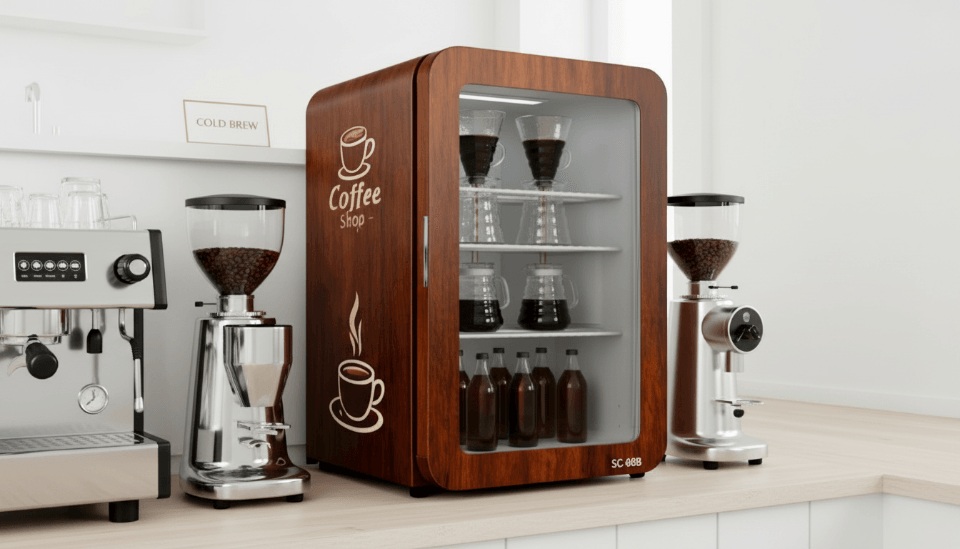
Choosing the wrong mini fridge can hurt your business. It wastes space, raises energy bills, and doesn't show off your products. But the right one can boost sales.
To choose the best commercial mini fridge, focus on four key areas. Think about the right size and capacity for your space. Decide between a glass or solid door. Check the energy efficiency to save money. And finally, consider style and branding options.
This sounds simple. But each of these points has details that can make or break your investment. I've been in the refrigerator business for a long time, from working on the factory floor to running my own. I have seen many business owners make costly mistakes by just looking at the price. Let's break down each point. This will help you make the best choice for your clients or your business.
What Size and Capacity is Right for a Commercial Mini Fridge?
A fridge that's too big wastes energy and space. If it's too small, you lose sales during busy times. Finding that perfect balance can be a real headache.
Focus on the footprint and inside layout, not just the liter capacity. Measure your counter or under-counter space first. Then, look for adjustable shelves to fit different cans and bottles. This ensures you can meet customer demand without wasting any space.
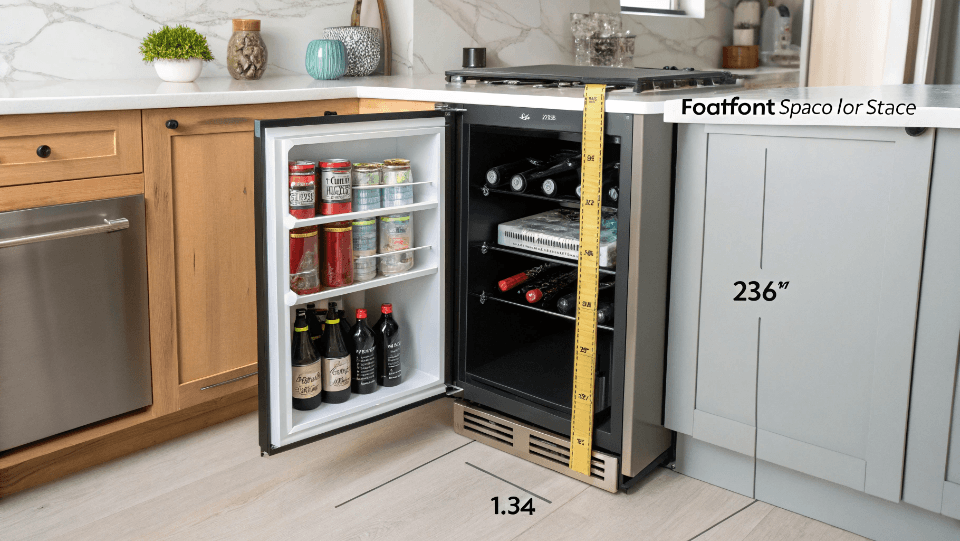
When I was designing refrigerators in my factory, we learned a big lesson. The liter number on the box doesn't tell the whole story. What matters most is usable space. How many bottles or cans can you actually fit inside? A well-designed 85-liter fridge might hold more than a poorly designed 90-liter one. It all comes down to the details of the design. A commercial space is expensive, so every inch counts. You need a fridge that works hard in the space it's given.
Beyond Liters: Thinking in Terms of Usable Space
You need to think like an engineer for a moment. Look at how the inside is built. Is there a big lump at the bottom for the compressor? That eats up space where you could put cans. Are the shelves easy to move? You might need to store tall juice bottles one day and small cans the next. Flexibility is key in a bar or café.
Here is a simple table to guide you. I use this with my clients.
| Feature | Why It Matters for a Bar/Café | My Insider Tip |
|---|---|---|
| Footprint (WxD) | It has to fit into tight bar or counter spaces. | Always leave 2-3 inches of space at the back for air to move. |
| Height | It must fit under standard counter heights (about 90cm/36in). | Look for models with adjustable feet so you can get a perfect fit. |
| Shelf Layout | It lets you store different bottle and can sizes. | Shelves you can remove or half-shelves are great for tall bottles. |
| Internal Fan | It makes sure every drink is perfectly cold. | This is a must-have for any real commercial fridge. Don't skip it. |
Glass Door vs. Solid Door: Which is Better for a Bar?
You want customers to see your cold drinks. But glass doors can use more energy. This choice feels like you have to pick between marketing and saving money.
For the front of the house, a glass door is a must. It is like a silent salesman and pushes people to buy on impulse. For backroom storage, a solid door is better. It insulates well and saves energy. The best setup often uses both types.
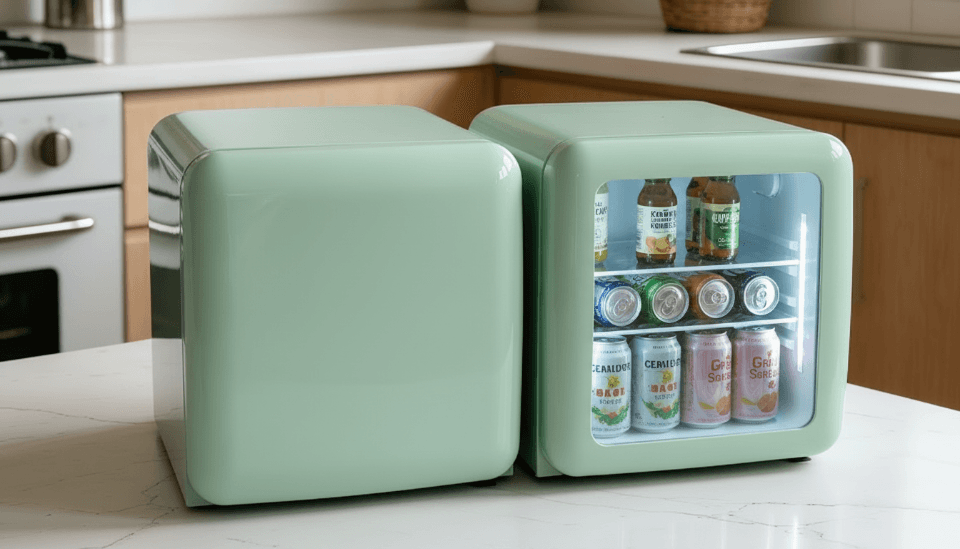
I remember a client who owned a small coffee shop. He used a regular, solid-door fridge at the front counter to store milk and some juices. Sales were okay. I suggested he try a small glass-door merchandiser instead. It was a simple change. His cold drink sales went up by 30% in one month. Customers could see the cold drinks, and it made them want one. Never underestimate the power of showing your products well. It's a simple truth of business.
The Merchandiser vs. The Workhorse
A glass door fridge in a bar or café is a merchandiser. Its job is to sell. Because of this, good ones have special features. They use double-paned or even triple-paned glass to keep the cold in. This glass often has an anti-fog coating so the view is always clear. Bright LED lighting makes the drinks look even better. These are not features you find on a cheap dorm room fridge.
A solid door fridge is a workhorse. Its job is to store things efficiently in the back. You don't need to see what's inside. You just need it to be cold and reliable. Solid doors have much better insulation than glass doors. They hold their temperature better and use less electricity. They are also usually more durable and can handle the bumps and scrapes of a busy kitchen.
Should You Focus on Energy Efficiency in a Commercial Mini Fridge?
The price of an energy-efficient fridge is higher at the start. It feels like you're spending more money now. But a cheap, inefficient model will cost you a lot on electricity bills.
Yes, you must. A commercial fridge runs 24/7. This makes energy a major operating cost. An energy-efficient model might cost more to buy, but it can save you hundreds of dollars each year. It pays for itself over time.
When you buy a piece of equipment for a business, you have to think about the total cost, not just the price tag. I call it the "real cost." It's the purchase price plus the cost of running it over its lifetime. For a refrigerator, the biggest running cost is electricity. A fridge never gets a day off. It is always running, keeping your products fresh and ready to sell. A small saving in energy per hour adds up to a big saving over a year.
Understanding the Real Cost of a Fridge
Let's talk about the engine of the fridge: the compressor. Many cheap fridges use a simple, standard compressor. It's either on full blast or completely off. A modern, energy-efficient fridge often uses an inverter compressor. Think of it like cruise control in a car. It can adjust its speed. It runs at a low, steady speed to maintain the temperature instead of constantly stopping and starting. This uses much less power.
In my factory, we made the choice a few years ago to use inverter compressors in all our premium commercial lines. The feedback from clients about their lower electricity bills was amazing. It proved to us that investing in better technology was the right thing to do. So when you look at a fridge, check for energy rating labels. Look for the kWh/year number. A lower number is always better for your wallet.
How Important is Style and Customization for Branding?
You sell stylish retro appliances. But your clients, the bar and café owners, might just see a fridge as a boring box. It can be hard to convince them to invest in style.
For businesses like boutique cafés and themed bars, style is very important. A retro or custom-branded mini fridge becomes part of the decor. It strengthens the brand's identity and can even help them charge more for the products inside.
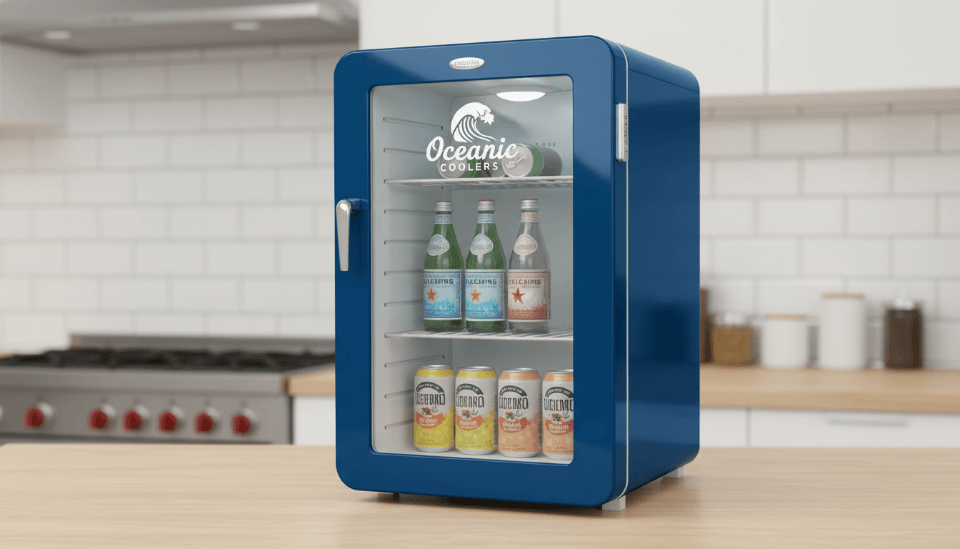
This area is your biggest strength, espeically since you are already an expert in retro appliances. You source your products from OEM factories in China. This gives you a huge advantage. A generic appliance is just a tool. But a stylish appliance is part of the experience. Think about a cool, retro-themed bar. A standard black mini fridge would look out of place. But a cherry-red fridge with chrome handles? That adds to the vibe. It becomes a conversation starter.
Turning an Appliance into a Marketing Tool
You can offer your clients something your competitors can't: a fridge that is also a marketing tool. Because you work with OEM factories, you can customize almost anything. I have produced many custom lines in my own factory, and the possibilities are endless.
You can help your clients stand out:
- Custom Colors: You can get the fridges made in any color. A café can match the fridge to its logo or brand colors.
- Branding: The factory can put a business's logo right on the glass door or the side of the unit. It's like a free advertisement.
- Hardware: You can change the handles and trim. Do they want shiny chrome for a 50s diner look? Or maybe brass for a high-end bar? It's all possible.
- Retro Design: You are already an expert here. You know that the key to a good retro look is in the details. It's about curved edges, high-gloss paint, and classic-style logos. This design trend is very popular right now, and you are in the perfect spot to benefit from it.
Remember how you sell your products. You use online distribution and influencers. A unique, custom retro fridge is very 'Instagrammable'. It looks much better in photos than a generic black box. This is a powerful selling point you can use.
Conclusion
To sum up, choosing the right mini fridge means looking past the price. Focus on size, door type, energy use, and style to find a unit that works for you.