
Tired of messy water pans and customer complaints? This constant maintenance costs time and money. Self-evaporating water trays solve this problem automatically, saving you hassle and keeping clients happy.
A self-evaporation water tray is a game-changer because it automatically disposes of defrost water. It uses heat from the refrigerator's own system to evaporate the water, eliminating the need for manual draining. This means less maintenance, improved hygiene, and a more reliable product for your customers.
I've seen this simple feature transform a product line from good to great. But you might be wondering how this "magic" actually happens and what it means for your business's bottom line. Let's break it down. Understanding the details is key to making smart decisions for your brand.
How does a self-evaporation water tray actually work?
Wondering how defrost water just vanishes? Without understanding the science, it's hard to explain the value. It’s actually simple engineering that cleverly uses waste heat to solve the problem.
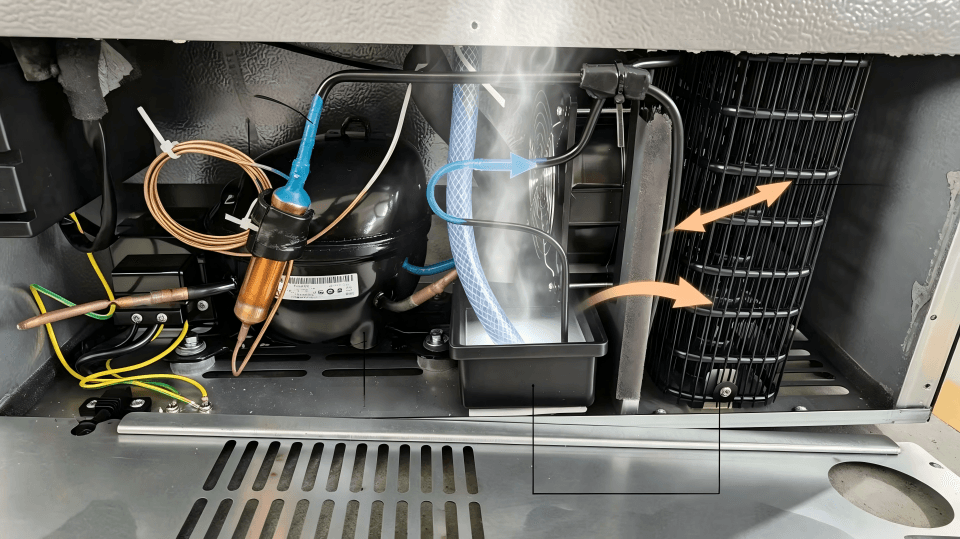
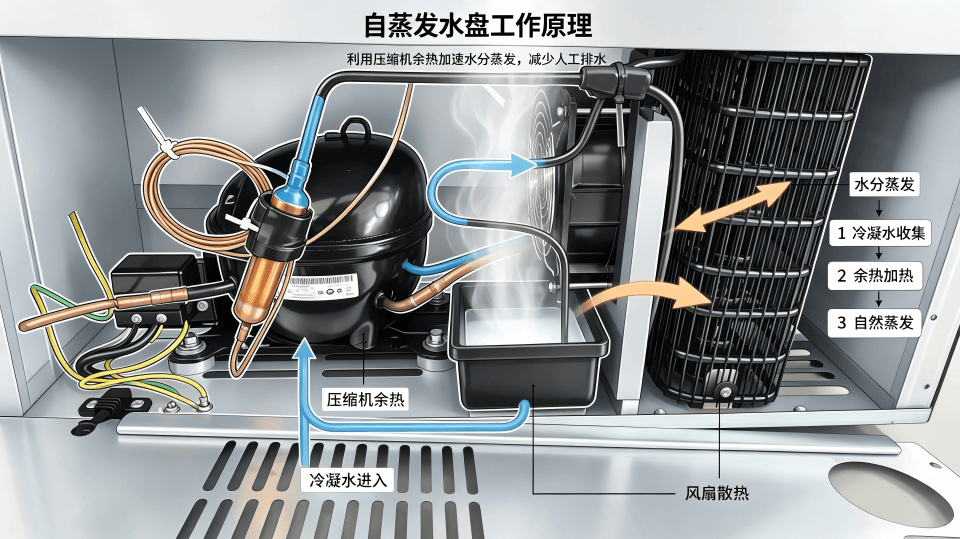
A self-evaporation tray works by collecting defrost water into a pan placed near the compressor. A loop from the hot condenser coil runs through or near this pan. The heat from this coil warms the water, causing it to evaporate naturally into the air, just like a puddle on a hot day.
When I started my factory, this was one of the first upgrades we standardized. The process is elegant in its simplicity. Refrigerators need a defrost cycle to prevent ice buildup on the evaporator coils. This cycle melts the ice, creating water. In older models, this water dripped into a simple plastic pan that someone had to empty.
The self-evaporating system takes this process a step further.
The Key Component: The Hot Gas Loop
The real "magic" is the hot gas loop. This is a section of tubing that comes directly from the compressor. This tubing contains hot, high-pressure refrigerant gas. We route this tubing directly into the water collection pan. The heat transfer is very efficient.
Step-by-Step Evaporation Process
Let's look at the sequence of events.
- Defrost Cycle Starts: A timer or sensor initiates the defrost cycle.
- Ice Melts: The evaporator coil warms up, melting any accumulated frost and ice.
- Water Collection: Gravity pulls the water down a drain tube into the self-evaporation tray.
- Heating & Evaporation: The hot gas loop continuously heats the tray, causing the collected water to evaporate into the surrounding air.
This process is completely passive and happens automatically. For business owners like you, this means you're providing a more sophisticated and hassle-free product. It's a small engineering detail that makes a huge difference in user experience.
What are the tangible benefits for a business owner like me?
You need features that deliver real value, not just marketing fluff. Investing in the wrong tech can hurt your bottom line. Self-evaporation trays offer clear benefits for your brand and customers.
For you, the benefits are huge. You'll see fewer service calls and complaints about leaks or overflows. This improves customer satisfaction and brand reputation. It's a powerful selling point that positions your retro refrigerators as modern and convenient, not just stylish. It also reduces potential liability from water damage.
I remember a client, much like you, who built a great brand for designer coolers. His biggest headache? Service calls about water on the floor. Customers loved the look of his products but hated emptying the drain pan. When we switched his production to include self-evaporating trays, his service calls for that issue dropped to zero.
This freed up his team and boosted his brand's reputation for quality. For you, aiming for the top spot in the retro refrigerator market, these details are everything. Let's compare the impact directly.
| Benefit Category | With Manual Drain Pan | With Self-Evaporation Tray |
|---|---|---|
| Customer Experience | Negative. A chore, risk of spills. | Positive. "Set it and forget it." |
| Maintenance Costs | High. Frequent service calls for leaks. | Low. Eliminates a common failure point. |
| Brand Perception | Basic, potentially inconvenient. | Modern, reliable, high-quality. |
| Sales Argument | Focus is only on aesthetics. | Sell both style and smart function. |
This isn't just about preventing a problem; it's about adding a layer of quality that customers feel. When an online influencer reviews your product, they won't just say "it looks great." They'll say "it looks great and is so easy to own." That kind of endorsement is priceless. It elevates your product above competitors who only focus on the retro look.
Are there different types, and which one is right for my retro refrigerators?
You're sold on the idea, but which type should your fridges have? The wrong choice could mean higher costs or poor performance. Let’s look at the options for your retro line.
Yes, there are two main types. The most common and reliable for units like your retro refrigerators uses a hot gas loop from the condenser. Another type uses a separate electric heating element. For efficiency and reliability, I strongly recommend the hot gas loop system for your products.
When sourcing from China, your factory partner might offer you different options. It’s crucial you know what to ask for. The choice mainly comes down to how the water is heated.
Two Paths to Evaporation
The method used to heat the water pan is the key difference. While both work, one is far superior for most applications, especially for the household appliances you specialize in.
Here's a simple breakdown:
| Feature | Hot Gas Loop System | Electric Heater System |
|---|---|---|
| Energy Source | Waste heat from the compressor. | Separate electrical element. |
| Energy Cost | Essentially free. Uses existing energy. | Adds to the unit's electricity use. |
| Reliability | Very high. No extra moving parts. | Lower. The element can fail. |
| Best For | Most refrigeration units (commercial & domestic). | Specialty low-temp or low-humidity uses. |
For your retro refrigerators, the choice is clear. You should insist on the Hot Gas Loop System. It's more energy-efficient, which is a great selling point for modern consumers. It's also more reliable because it doesn't add another electrical component that could break down. From my experience building thousands of refrigerators, simplicity equals reliability. This system is the definition of simple and effective engineering, turning waste heat into a valuable function. It's the standard for a reason.
What should I look for when sourcing refrigerators with this feature from China?
You're ready to talk to suppliers, but how do you verify quality? A cheap system can fail, harming your brand. Knowing what to look for helps you evaluate factories effectively.
When sourcing, specify a hot gas loop system. Ask for a stainless steel water pan, not plastic, for durability and hygiene. Check the welding quality on the gas loop. Also, ensure the tray's size is adequate for the refrigerator's capacity, especially for humid climates your customers might be in.
This is where my factory experience is most valuable. When you're dealing with OEM production in China, you need to be very specific in your technical requirements. Don't just tick a box for "self-evaporation." You need to define the quality standards.
Here's what I tell my clients to demand.
Material Matters: Pan Construction
Insist on a water tray. Some factories will try to save costs without a tray. bad tray become brittle over time from the heat, leading to cracks and leaks. Good one lasts the lifetime of the refrigerator, is more hygienic, and handles the heat without any issues. This is a non-negotiable point for a premium product.
Design and Execution
- Tube Placement: The hot gas tube should be routed inside the pan, preferably in an 'S' shape to maximize surface area and heat transfer. Some low-cost designs just run the pipe under the pan, which is much less effective.
- Tray Size: The tray must be large enough to handle the maximum amount of defrost water. Ask the factory if the design is tested for high-humidity environments. A tray that's too small will overflow.
- Weld Quality: Inspect the brazing or welding points where the loop connects. This is a potential point for refrigerant leaks if done poorly. Ask for photos or inspect samples closely.
When you issue your product specifications, include these points. It shows the factory you are a knowledgeable buyer and forces them to meet a higher standard. It protects your investment and your brand.
Conclusion
In short, a well-made self-evaporation tray elevates your product. It reduces maintenance, boosts customer satisfaction, and gives you a powerful advantage over the competition. A true game-changer.