
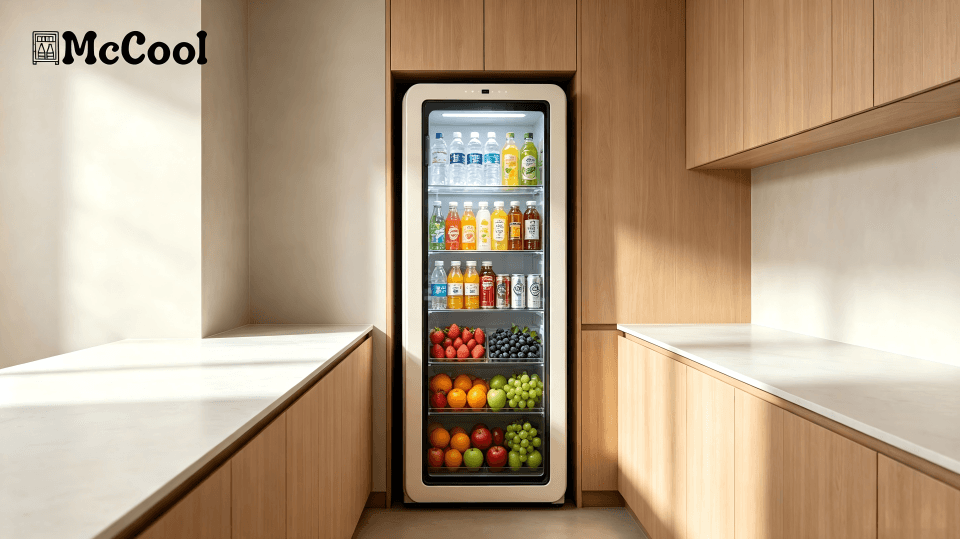
Struggling to find a fridge for an awkward space? Standard sizes don't fit, and customers are walking away. This can hurt your brand's reputation and your sales numbers.
To get custom-sized fridges, you need to work directly with a flexible OEM/ODM manufacturer. They can adjust dimensions, internal layouts, and features to your exact specifications. This is your key to serving niche markets that big brands ignore.
I remember when I first started my factory. A client came to me with a unique problem. His customers lived in historic city apartments with very narrow kitchens. He couldn't find a single refrigerator brand that made a slim model that would fit. This challenge got me thinking, and the solution we found has helped many of my clients grow their business by catering to these special needs. It's a powerful way to stand out. So, how do you actually start this process? Let's break it down, starting with the first big question.
What Are the Key Steps to Ordering Custom-Sized Fridges?
You have a great idea for a custom fridge but worry the process is too complex. You fear miscommunication with the factory and costly mistakes. It feels overwhelming.
The process involves four main steps: providing detailed specifications, confirming engineering drawings, approving a prototype, and placing the bulk order. Clear communication at each stage is crucial to ensure the final product matches your vision and your customers' needs.
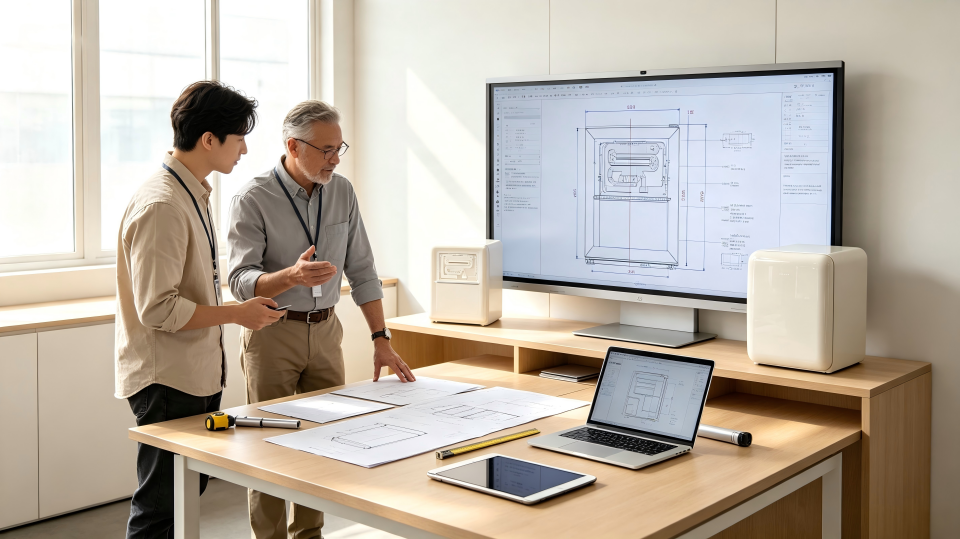
Ordering a custom product might seem scary, but it's a straightforward process if you work with the right partner. I've guided hundreds of clients through this. The most important thing is being detailed and methodical.
From Idea to Drawing
First, you need to provide the factory with as much detail as possible. This isn't just about the basic height, width, and depth. Think about everything. Where should the handle be? Which way should the door swing? Do you need adjustable shelves? For your retro refrigerators, the color and finish are also critical. I once had a client who forgot to specify the door swing direction for an under-counter model. We caught it during the drawing review. This quick check saved him from ordering hundreds of units that would have been impossible for his customers to install. The factory's engineering team will then turn your requirements into a technical drawing for your approval.
The Importance of the Prototype
Once you approve the drawings, the factory will create a prototype, or what we call a "golden sample". This sample is everything. It's your one chance to see, touch, and test the product before committing to a large order. You can check the build quality, test the cooling performance, and make sure the retro color is exactly what you envisioned. Use this table as a checklist when you receive your sample.
| Checklist Item | Purpose | Why It's Important for Your Brand |
|---|---|---|
| Dimensions | Verify exact Height x Width x Depth. | It must fit the unusual spaces your customers have. |
| Functionality | Test cooling, noise, and energy use. | Ensures performance meets standards and customer expectations. |
| Finish & Color | Check aesthetics, paint quality, and feel. | The "retro" look is your key selling point; it must be perfect. |
| Packaging | Inspect the box for shipping durability. | Prevents damage during transit from China to Lebanon. |
Approving this sample gives the factory the green light for mass production.
How Do Custom Dimensions Affect Cost and Minimum Order Quantity (MOQ)?
You love the idea of unique custom sizes but a big fear is that the cost will be too high. The thought of a large minimum order for a new product feels very risky.
Customization increases costs due to new molds and production line adjustments. This also leads to a higher Minimum Order Quantity (MOQ) because factories must cover these setup expenses. However, you have smart options to manage this investment.
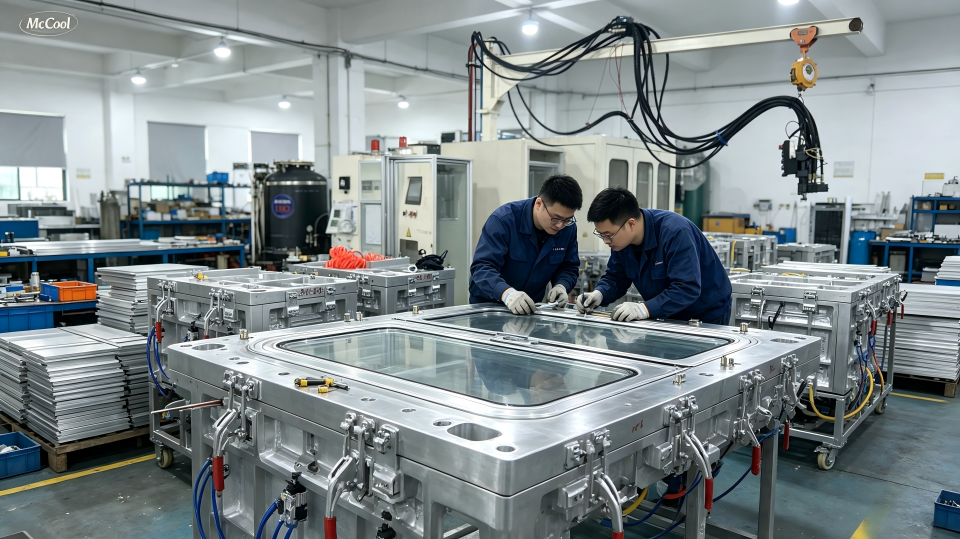
Cost is always a major concern, especially for a small or medium-sized business. Let's be direct about it. When you request a truly unique size, the factory often has to create new molds. A steel mold for a refrigerator body or door is a significant investment, sometimes costing tens of thousands of dollars. This one-time engineering fee, or NRE cost, is a big part of the initial investment.
Understanding the Cost Breakdown
Because of this high setup cost, the factory needs to produce a certain number of units to make it worthwhile. This is why a fully custom design has a high MOQ, often 500 units or more, which can be a 40ft High-Cube container. The cost is not just about the mold; it's also about re-configuring the assembly line and sourcing non-standard components. All of this adds to the final unit price. But don't let this discourage you. There's a more accessible path.
Strategies to Manage MOQ
You don't always have to go for a fully custom design from scratch. Your best strategy is to ask a potential factory partner: "What existing platforms or chassis can you modify?" Most factories, including mine, have base models that are flexible. We can often change the height or depth of a refrigerator without creating expensive new molds. This "semi-custom" approach is a game-changer for businesses like yours. It allows you to create a unique size for your market with a much lower MOQ and little to no mold fees.
| Feature | Full Custom | Semi-Custom (Modified) |
|---|---|---|
| Mold Fee | High (New molds needed) | Low to None (Uses existing molds) |
| MOQ | High (e.g., 500+ units) | Lower (e.g., 100-200 units) |
| Design Freedom | Total and unlimited | Limited by the base model's width |
| Best For | Truly unique, high-volume products | Niche markets and testing new sizes affordably |
For your Lebanese market, you could start with a semi-custom slim refrigerator to test the demand before investing in a fully custom model.
What Technical Challenges Come With Non-Standard Fridge Sizes?
You're excited about a unique fridge design but worry about technical problems. What if a skinny, tall fridge is unstable? What if a shallow one doesn't cool well?
The main challenges are ensuring cooling efficiency and structural stability. A drastic change in shape can affect airflow and balance. The cooling system must be recalibrated for the new internal volume to guarantee performance and safety.
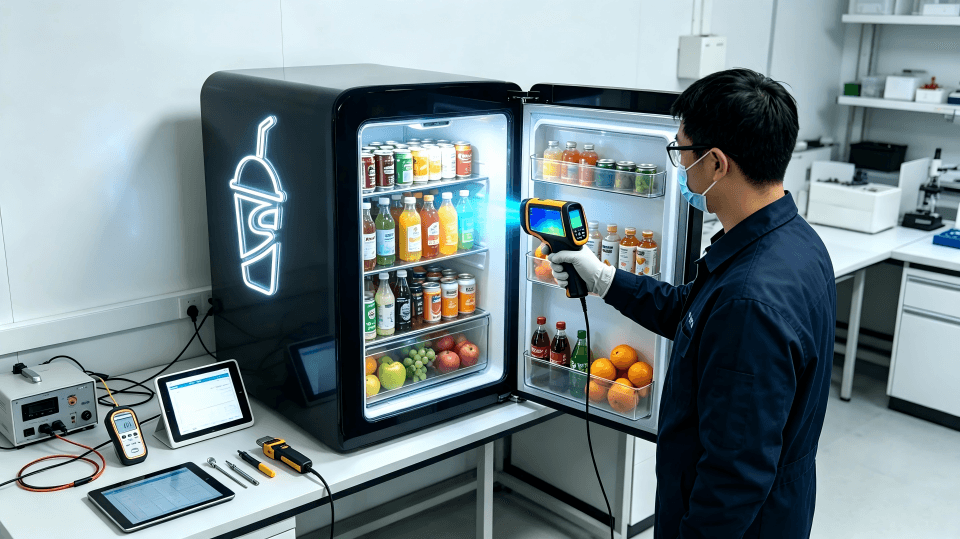
This is where a good factory partner proves its worth. Creating a pretty box is easy; making it a reliable and safe refrigerator is the real challenge. From my experience building refrigerators, two areas need special attention: the cooling system and the physical structure.
The Science of Cooling
You can't just take the cooling system from a standard 100-liter fridge and put it into a custom 100-liter fridge that is tall and narrow. The shape dramatically changes airflow and heat distribution. The compressor, evaporator, and condenser must all be perfectly matched to the new internal volume and layout. I've seen designs from other factories fail because they skipped this step. The fridge either froze everything near the cooling element or couldn't keep the items at the bottom cold. A skilled engineering team will run simulations and tests to create a balanced system that cools evenly and efficiently.
Ensuring Stability and Safety
Physical stability is another critical point, especially for a tall, narrow design. The center of gravity will be higher, making it more prone to tipping. A good design will incorporate this, perhaps by placing heavier components like the compressor at the very bottom. For certain markets, we even add anti-tip brackets for extra safety. For under-counter or built-in models, the challenge is different: ventilation. The fridge needs to breathe to dissipate heat. A custom design must include adequate vents in the right places to prevent overheating, which is a fire hazard and shortens the product's life. Your manufacturing partner should also ensure the custom unit can pass all required safety certifications for your country, like CE or others, giving you and your customers peace of mind.
Conclusion
In short, getting custom-sized fridges is very achievable. By partnering with the right manufacturer, you can solve unique customer problems, create a niche, and make your brand stand out.